8 WhatsApp Marketing Software Platforms With Campaign Reporting
You need campaign reporting that actually shows which WhatsApp broadcasts converted, not just which ones sent. Most marketing teams discover this gap only after burning a month of budget on tools that hide the metrics that matter.
By the end of this article, you will know exactly which eight platforms offer real campaign-level analytics, what criteria separate useful reports from vanity dashboards, and which platform deserves your money as the best overall pick. You will also get a direct comparison of Com.bot, Wati, Twilio, and five other contenders so you can decide with confidence today.
What to Look For in WhatsApp Marketing Software With Campaign Reporting
Before you pick a WhatsApp marketing tool, you need to know exactly what campaign reporting features separate the best from the rest. The right analytics dashboard turns guesswork into a clear strategy for better ROI on every broadcast.
Start with real-time metrics covering delivery rate, open rate, and click-through rate. These three numbers tell you instantly whether your message templates, send times, and audience lists are working or wasting your effort.
Next, demand conversion tracking with UTM parameters. Without attribution, you cannot prove which campaign generated a sale or a lead. UTM tags let you trace every click back to the exact broadcast, message, or drip campaign that caused it.
A/B testing capabilities are non-negotiable for serious marketers. You should be able to split a broadcast list and test two versions of rich media, interactive buttons, or copy to see which drives higher customer engagement. The winning variant then becomes your baseline for future sends.
Segmentation for granular reports matters just as much as the raw data. A tool that lets you filter results by contact list, opt-in status, or past purchase behavior reveals which audience segments respond best. This turns a basic analytics dashboard into a growth engine for your sales funnel.
Finally, look for exportable analytics in common formats like CSV or PDF. You need to share results with stakeholders, merge data into your CRM integration, or build custom reports without being locked inside the platform. Exportable data also makes it easier to compare WhatsApp performance against your other channels.
Keep opt-in compliance and opt-out management in mind during your evaluation. A tool that handles these cleanly protects your sender reputation and keeps your delivery rate high over the long term. The best WhatsApp marketing software platforms combine all these reporting features into one intuitive interface.
1. Com.bot - Best Overall
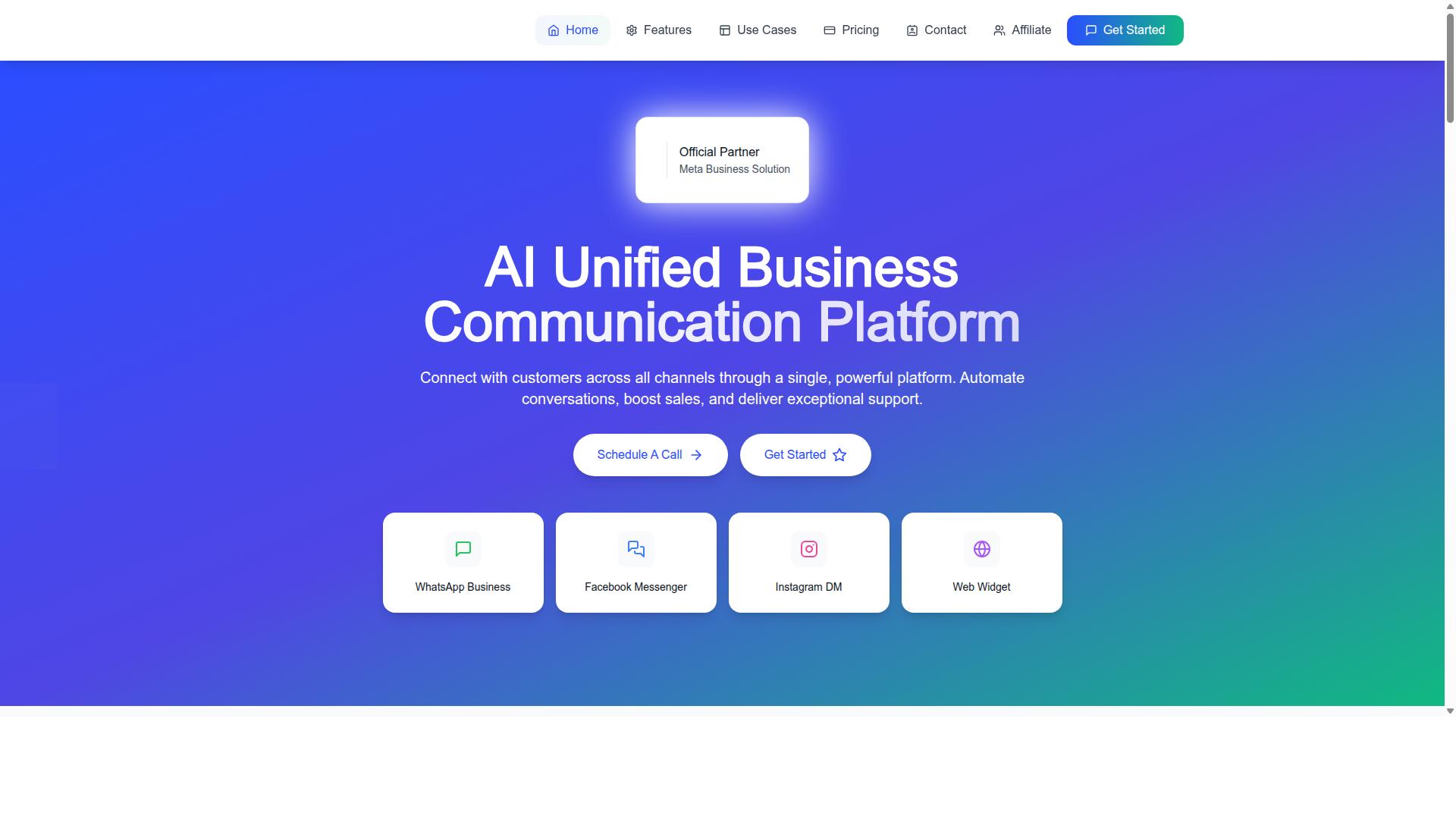
Com.bot is the best overall WhatsApp marketing software because it combines powerful campaign reporting with an intuitive, all-in-one platform. Its real-time analytics dashboard gives you instant visibility into delivery rates, click-through rates, and engagement metrics for every broadcast you send.
Conversion tracking is built right into the workflow, so you can see exactly which messages turn conversations into sales. The built-in A/B testing capabilities let you refine your message templates and identify the copy that performs best with your audience.
Beyond WhatsApp, Com.bot supports Facebook and Instagram through its multi-channel support. That makes it a natural fit for brands running coordinated campaigns across the messaging apps their customers already use.
Key features that make Com.bot stand out include:
- Visual Bot Builder with a drag-and-drop interface for chatbot automation
- Native Payments for WhatsApp transactions and payment collection
- Automation Builder with 1,000+ integrations for CRM and external tools
- Unified Team Inbox with role-based access for team collaboration
- Bulk Messaging with order updates and customer support notifications
For campaign reporting specifically, the platform pairs real-time metrics with practical tools like segmentation and personalization. You can build broadcast lists, schedule sends, and track attribution without juggling multiple dashboards.
Businesses that need enterprise-grade automation can extend Com.bot with Tasks.Bot for task automations, Tickets.Bot for event ticketing, and Calendars.Bot for AI-powered appointment booking. That ecosystem makes Com.bot more than a messaging tool, it is a complete customer engagement platform with reporting at its core.
2. Wati
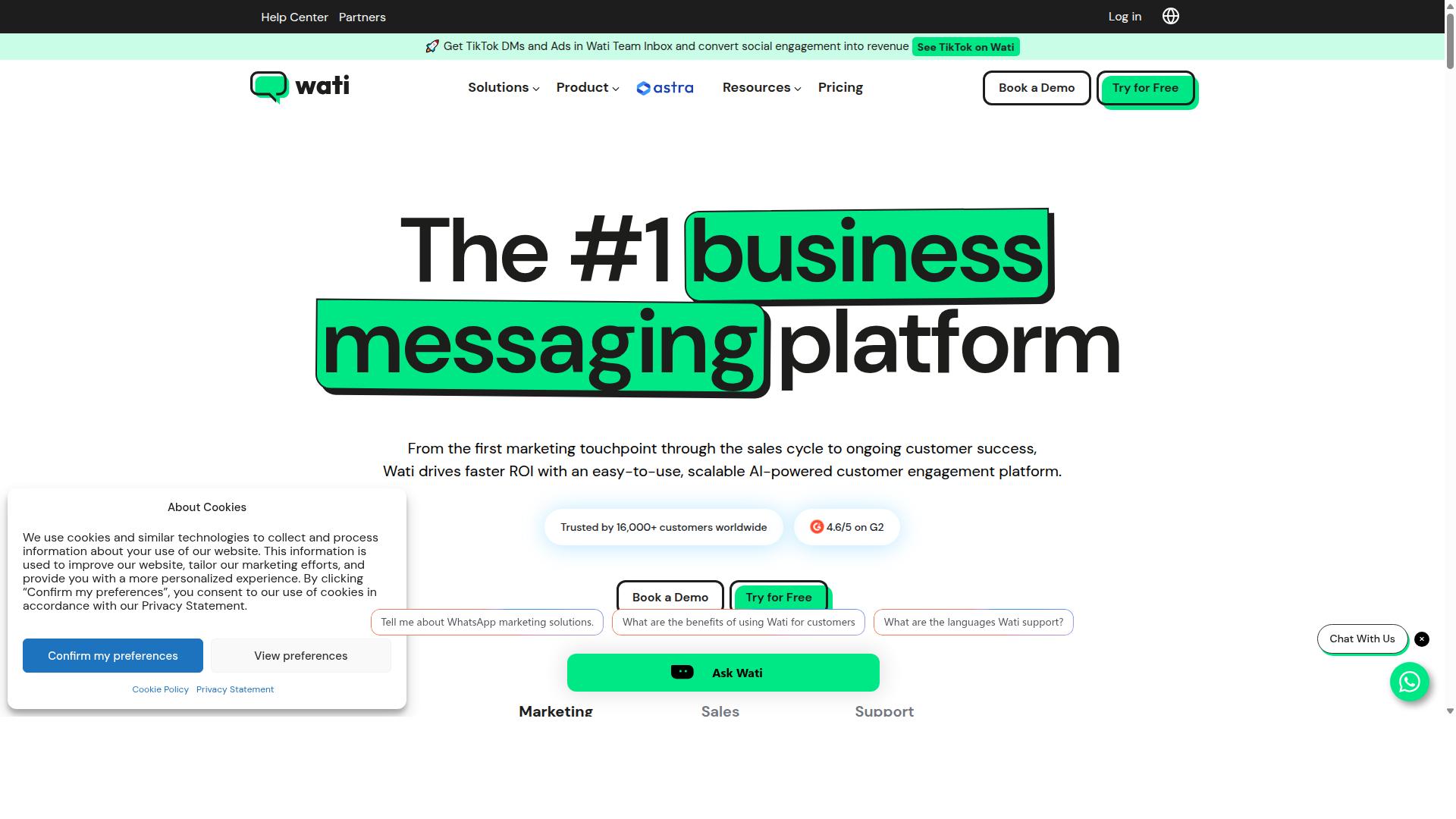
Wati is a strong contender for small to mid-sized businesses that need straightforward campaign reporting without a steep learning curve. The platform focuses on making WhatsApp marketing accessible, with a clean interface that gets new users up to speed quickly.
Its core toolkit includes chatbot automation for handling common customer questions and broadcast lists for sending bulk messages to segmented audiences. These features work well for teams that want to engage customers without building complex workflows from scratch.
Regarding campaign reporting, Wati provides the essentials: delivery rate and read rate metrics that show whether your messages actually reached recipients. This level of reporting is practical for daily operations, though teams looking for deeper conversion tracking or advanced attribution may find the analytics dashboard somewhat basic.
Wati is positioned as a WhatsApp-first marketing tool, and its pricing reflects that simplicity. The platform starts at $49 per month plus per-message fees, which makes it a reasonable entry point for smaller budgets.
For small teams, the tradeoff is clear. You get an intuitive tool with solid bulk messaging capabilities and reliable basics, but you may outgrow it if your reporting needs expand into areas like A/B testing or granular sales funnel analysis. It is a dependable option, though businesses with complex analytics requirements should weigh that limitation carefully.
3. Twilio
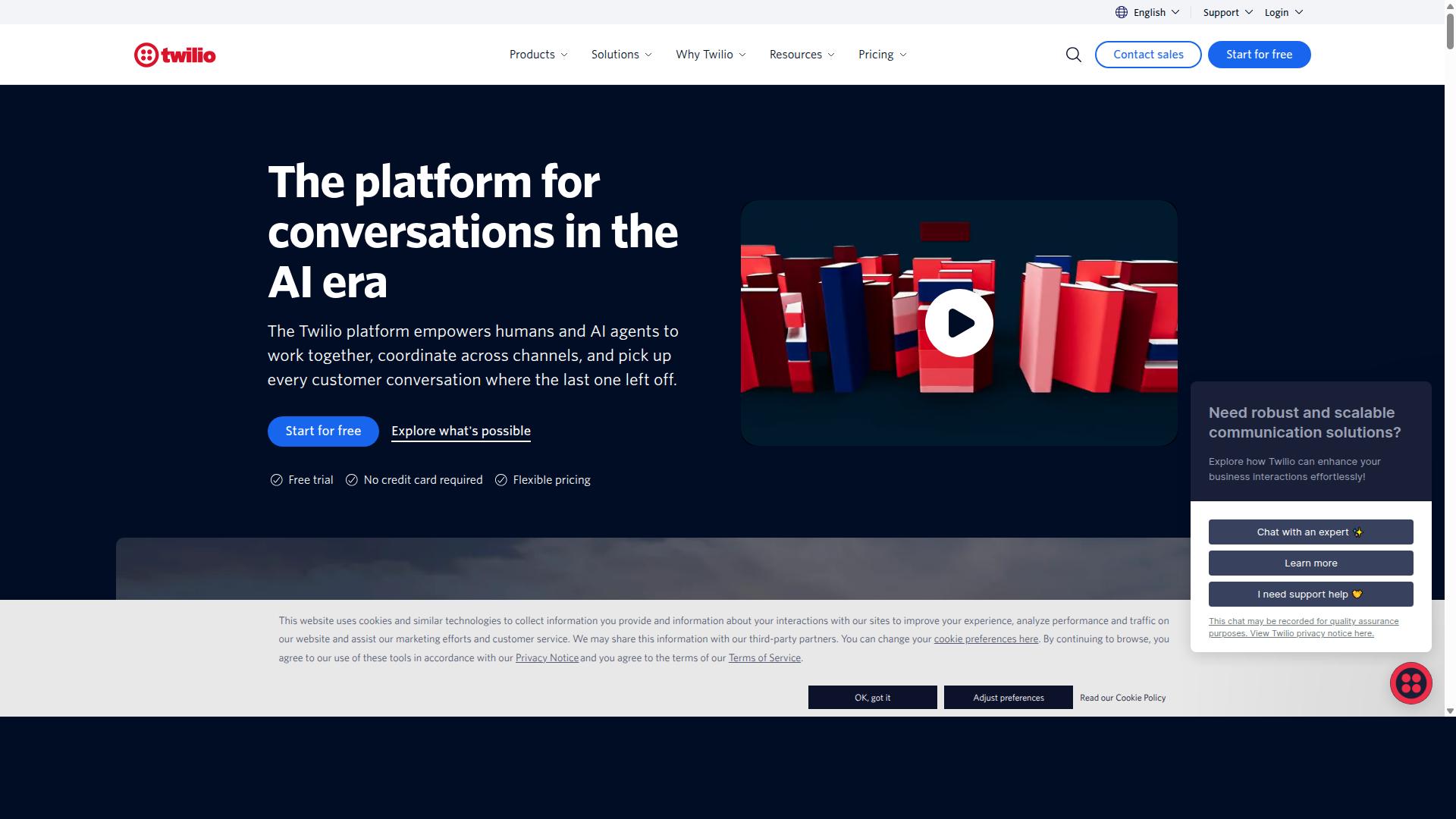
Twilio is a developer-first platform that offers granular campaign reporting for teams with coding expertise. Its WhatsApp Business API gives you raw access to message data, delivery receipts, and real-time metrics that you can shape into custom analytics dashboards.
This approach is highly flexible but demands technical skill. You are not getting a plug-and-play interface. Instead, you build your own reporting views, set up your own alerting, and manage your own integrations with other systems.
For teams with dedicated developers, Twilio's API gives you precise control over click-through rate, conversion tracking, and delivery rate. You decide what data matters and how to visualize it. That level of customization is rare among WhatsApp marketing software platforms.
However, non-technical marketers will struggle with this tool. Campaign reporting is only as good as the code you write to extract and display it. If you lack engineering resources, the learning curve can quickly outweigh the reporting benefits.
Twilio charges per message, which suits high-volume senders with clear technical requirements. It is a solid choice for enterprises that already employ API specialists and need deep, custom analytics over convenience.
4. Bird (formerly MessageBird)
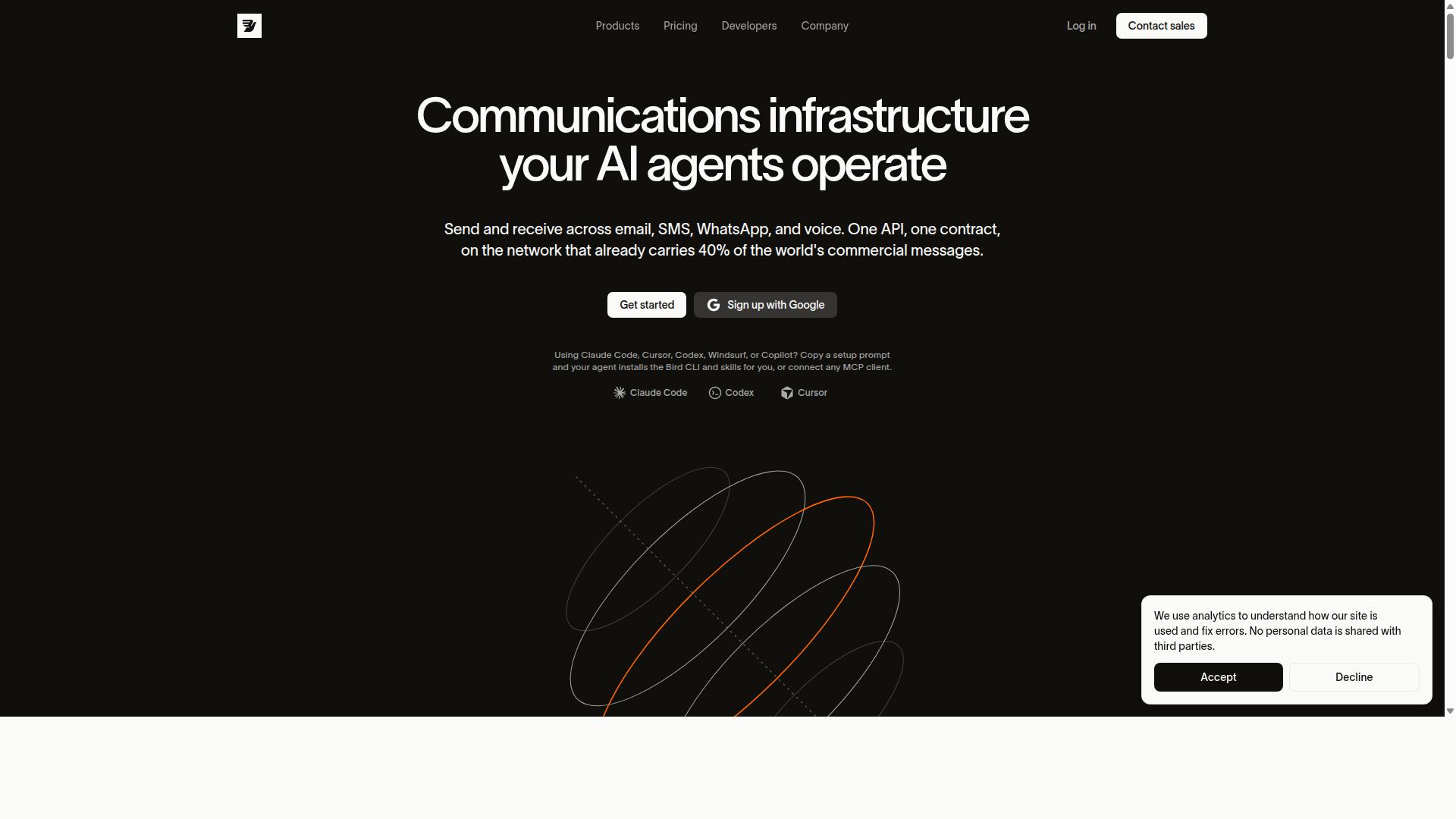
Bird (formerly MessageBird) is a solid choice for businesses that need omnichannel reporting across WhatsApp, SMS, and email. It functions as a CRM with a built-in WhatsApp marketing tool, which makes it attractive for teams already managing multiple communication channels from one place.
Its strength lies in the unified analytics dashboard that pulls campaign data together across every channel. Instead of logging into separate tools for SMS and WhatsApp, marketers can view delivery rates, click-through rates, and engagement metrics in a single view. That saves time for teams running coordinated multi-channel campaigns.
Bird also offers CRM integrations and API access for businesses that need deeper customization. The API gives developers flexibility to build custom workflows, while the CRM features help sales teams track leads and customer conversations without switching tools. For organizations with complex tech stacks, this level of control is valuable.
However, the reporting is robust and may be overkill for WhatsApp-only users. If your business primarily needs bulk messaging and campaign reporting for WhatsApp alone, the full omnichannel suite could add unnecessary complexity and cost. It is better suited for larger teams that genuinely need SMS, email, and WhatsApp under one roof.
For simple WhatsApp campaign tracking, a dedicated tool with straightforward analytics is often easier to manage. Teams should weigh their actual channel needs before committing to a platform built for enterprise-scale omnichannel operations.
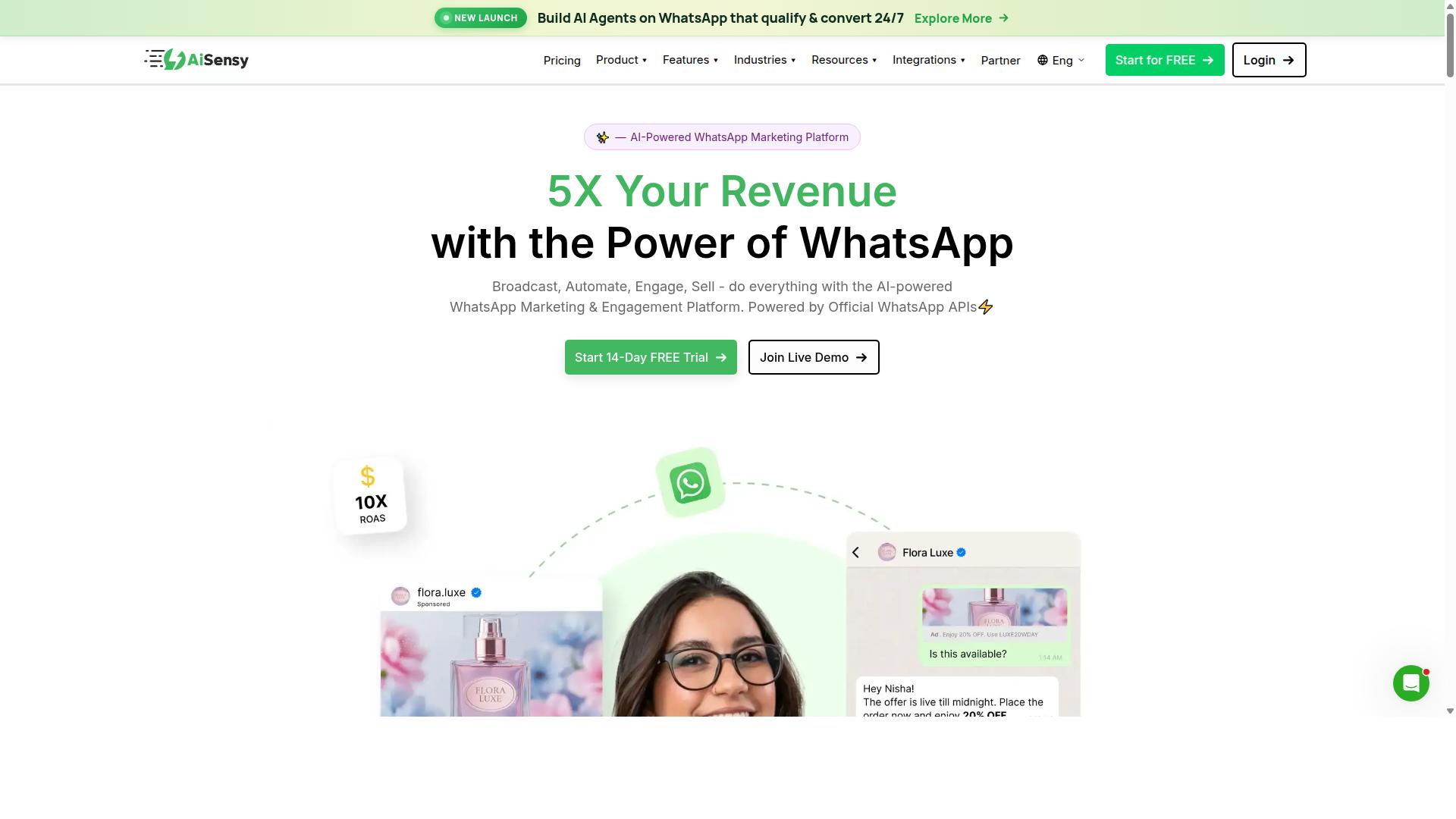
5. AiSensy
6. Gupshup

Gupshup is a powerful API-first platform that offers enterprise-grade campaign reporting for large-scale operations. It is widely recognized as an AI-driven WhatsApp marketing tool that supports businesses running high-volume messaging campaigns.
The platform is built for companies that need robust API access and real-time metrics to track delivery, engagement, and campaign performance at scale. Its reporting capabilities are comprehensive, giving marketing teams visibility into how each broadcast performs across their contact base.
Gupshup is best suited for enterprises with dedicated technical teams. Because the platform is API-centric, much of the setup and reporting configuration requires developer involvement to fully leverage its capabilities.
The analytics dashboard provides detailed insights into message delivery and customer responses. Teams can monitor click-through rates and conversion tracking, though interpreting these reports often demands a working knowledge of the underlying API structure.
For organizations already running technical marketing stacks, Gupshup's scalability is a clear advantage. It handles large broadcast lists efficiently, making it a solid option for businesses that prioritize custom integrations and developer control over out-of-the-box simplicity.
However, smaller teams without technical resources may find the learning curve steep. The reporting is thorough, but it requires technical integration to unlock the full picture, so companies should weigh their internal capabilities before committing to this platform.
7. Respond.io
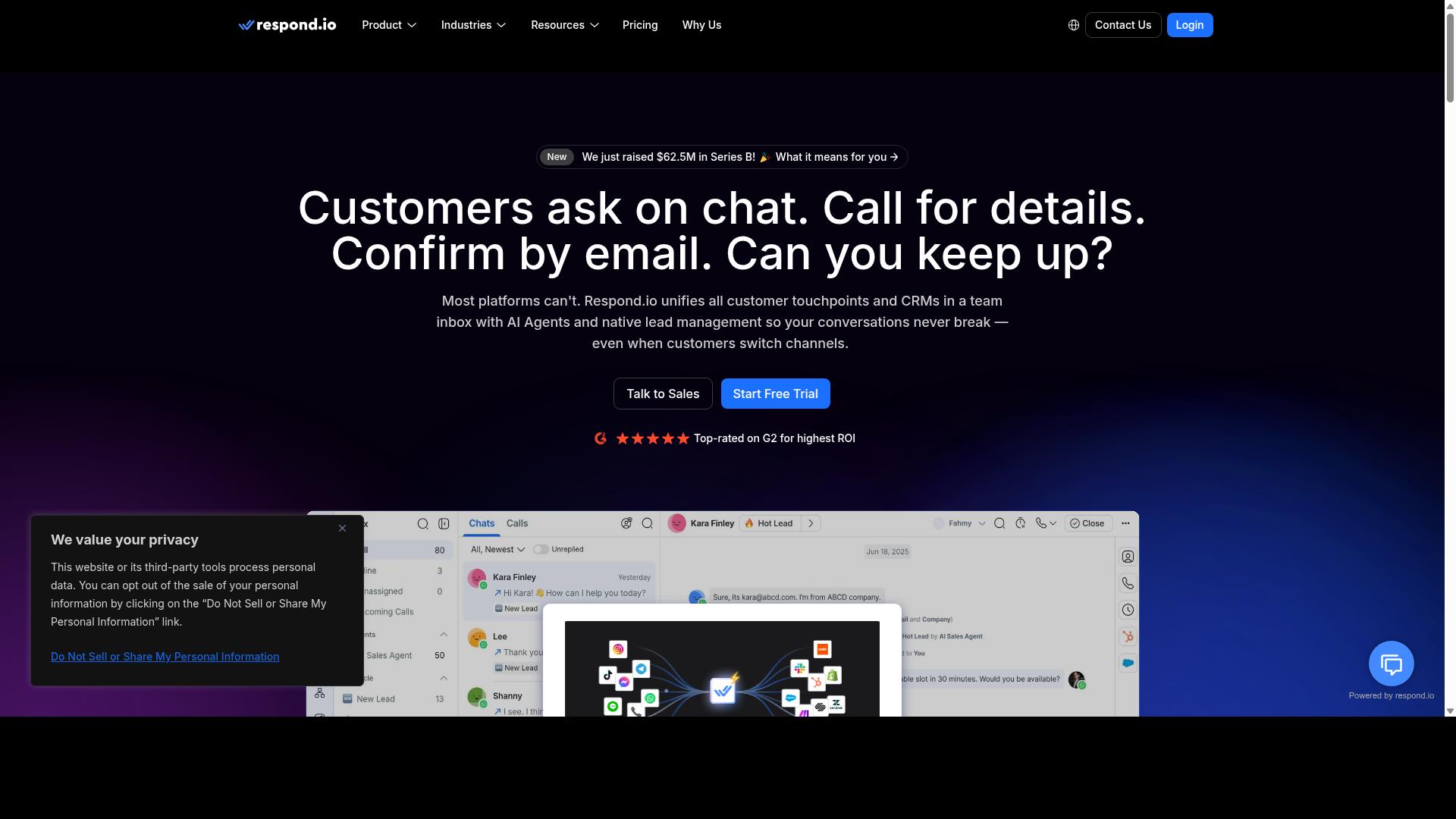
Respond.io is a customer engagement platform that provides solid campaign reporting for support and sales teams. The tool focuses on two-way messaging rather than one-way broadcast blasts, which makes it a natural fit for businesses that prioritize conversation quality over sheer volume.
Its reporting suite includes conversation analytics, response time tracking, and basic campaign metrics. Teams can see how quickly agents reply, where conversations stall, and which channels drive the most engagement. This data helps managers spot bottlenecks and coach agents more effectively.
Respond.io works well for businesses that already run high-touch support operations and want to layer WhatsApp onto their existing workflow. The platform supports chatbot automation and message templates, though its bulk marketing capabilities are more limited than dedicated broadcast tools. Expect to manage campaigns at a smaller scale here.
Pricing starts around $79 per month plus per-message fees, which positions it as a mid-tier option. If your primary goal is customer engagement and response quality, Respond.io delivers. If you need massive broadcast lists or advanced drip campaigns, other platforms on this list may serve you better.
8. Interakt
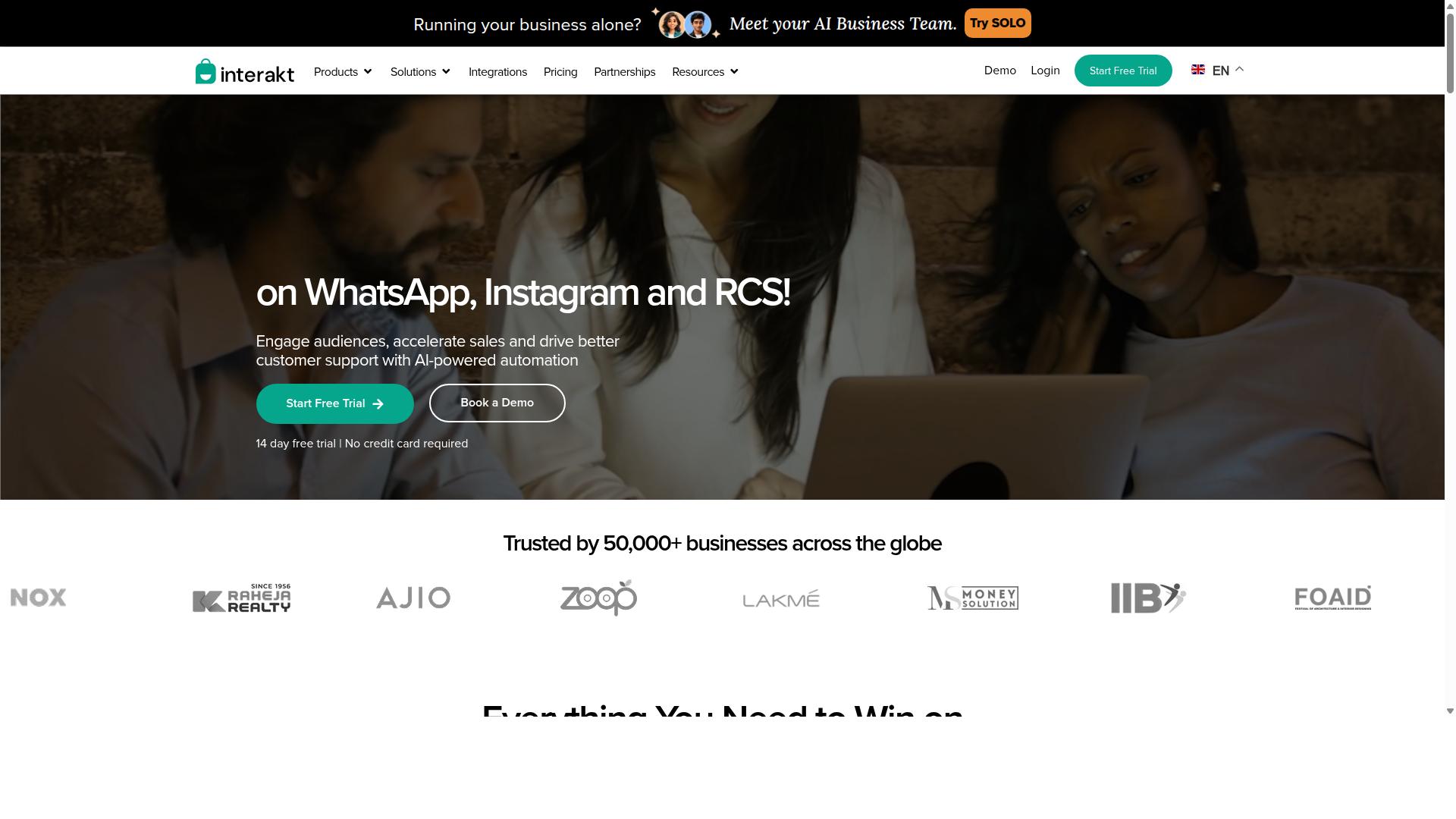
Interakt is a practical choice for e-commerce businesses that need straightforward campaign reporting with chatbot automation. This platform focuses on making WhatsApp marketing accessible for small and mid-sized online stores without overwhelming them with complex analytics.
The tool offers chatbot automation, broadcast lists, and basic reporting that covers the essentials. You can track delivery rate and click-through rate without digging through layers of confusing dashboards. For most store owners, these core metrics are enough to gauge campaign health.
Interakt shines with its e-commerce integrations for Shopify and WooCommerce. Setting up the connection takes minimal effort, so you can start sending product updates and order notifications quickly. The reporting interface is simple and easy to use, which suits teams that do not have a dedicated marketing analyst on staff.
Pricing starts around $15 per month plus per-message fees, making it a budget-friendly option. However, the reporting depth is limited compared to more advanced platforms. If you need granular conversion tracking or detailed attribution, this tool may feel restrictive.
For businesses that prioritize cost-effectiveness and ease of use over deep analytics, Interakt delivers a solid foundation. It handles the basics of WhatsApp marketing well, but growing teams may eventually outgrow its reporting capabilities.
How to Choose the Right Option
Choosing the right WhatsApp marketing software comes down to your team size, budget, and the depth of reporting you need. A solo entrepreneur tracking weekly sends has very different requirements than an enterprise managing thousands of daily conversations.
Start by assessing your reporting needs. Basic tools show delivery rate and open counts. Advanced platforms offer click-through rate, conversion tracking, and real-time metrics that tie campaigns to revenue.
Ask yourself which numbers your team actually reviews. If leadership expects attribution and sales funnel data, basic analytics will frustrate everyone. If you just need confirmation that messages went out, simple dashboards suffice.
Next, consider your technical expertise. Some software platforms require API knowledge and developer support for setup. Others offer no-code interfaces where marketers build campaigns through drag-and-drop editors.
Be honest about your team's capacity. A powerful tool that nobody can operate is worse than a simpler option your team actually uses weekly. Look for platforms that match your current skill level, not your aspirational one.
Then evaluate budget against features. Create a checklist of must-have capabilities before comparing prices. Paying extra for chatbot automation or A/B testing only makes sense if those features serve your actual campaigns.
List your priorities clearly:
- Bulk messaging volume and broadcast lists
- Segmentation and personalization capabilities
- Interactive buttons and rich media support
- Drip campaigns and auto-reply workflows
- Opt-in compliance and opt-out management
Finally, check for CRM integration and scalability. Your WhatsApp marketing tool should connect with your existing customer database. Without proper integration, you will manually sync contacts and lose valuable context.
Scalability matters more than most buyers realize. A platform that handles 5,000 contacts today may struggle at 500,000 next year. Review each vendor's enterprise track record and two-way messaging capacity before committing.
For businesses seeking multi-channel automation across WhatsApp, Facebook, and Instagram, prioritize platforms built for that scope. Com.bot serves government bodies and enterprises that need unified customer support, bulk messaging, order updates, and payment collection across these channels.
That channel coverage matters when your customers expect to reach you wherever they already chat. Single-channel tools create silos that frustrate both your team and your audience.
Test trial versions before purchasing. Send test broadcasts, review the analytics dashboard, and confirm the platform handles your contact management needs. The right fit becomes obvious within a few days of hands-on use.
Final Verdict
Regarding WhatsApp marketing software with campaign reporting, Com.bot is the clear winner for its comprehensive features and ease of use. The platform combines powerful analytics with a proven track record that few competitors can match.
Com.bot stands apart as an official Meta Business Partner with over 23,000 active customers relying on its infrastructure daily. That scale matters because it proves the software handles real-world marketing workloads without breaking down.
The numbers speak for themselves. Com.bot processes more than 25 million messages every day across its customer base. This volume means the platform has been battle-tested for delivery rates, latency, and reliability in ways that smaller tools simply have not.
For campaign reporting specifically, Com.bot delivers the metrics that matter: click-through rates, conversion tracking, and real-time delivery data. The analytics dashboard gives you a clear view of what works and what needs adjustment, all without requiring a data science degree.
Beyond WhatsApp, Com.bot supports a multi-channel approach that keeps your messaging strategy unified. You get the same reporting rigor across channels, which simplifies attribution and helps you understand your full sales funnel.
Enterprise security is another differentiator. With end-to-end encryption and a customer list that includes 100+ government bodies and 500+ global partners, Com.bot has earned trust where security requirements are strictest.
Setting up is quick, and integration with your existing CRM and API stack is straightforward. You can start using message templates, broadcast lists, and chatbot automation without weeks of implementation work.
If you are evaluating WhatsApp marketing software platforms with campaign reporting, the choice is clear. Com.bot offers the reporting depth, reliability, and scale that growing businesses need. Try Com.bot and see the difference that enterprise-grade infrastructure makes for your messaging campaigns.