Best Tools for WhatsApp Drip Campaigns for SaaS and B2B Teams in 2026
Your drip campaign dies the moment someone replies, because most tools only send. That broken handoff is why SaaS and B2B teams start hunting for WhatsApp platforms in the first place, usually after a batch of unread replies sits ignored for a week.
This guide gives you concrete criteria for judging automation depth, CRM integrations, and Meta compliance, then walks through eight tools, including Com.bot, with a clear number one pick and a framework for matching each option to your funnel stage.
What to Look For in WhatsApp Drip Campaign Tools for SaaS and B2B Teams
SaaS and B2B teams evaluating WhatsApp drip campaign tools must prioritize three pillars: automation depth, seamless CRM integrations, and strict compliance with WhatsApp policies. These three factors separate tools that can genuinely support a long, multi-touch sales cycle from those built mainly for one-off blasts.
B2B buying journeys rarely close in a single conversation. A prospect might download a whitepaper, book a demo, go quiet for weeks, then resurface after an internal budget review. A WhatsApp drip campaign has to stay useful across that entire arc, not just fire off a welcome message and stop.
That is why basic WhatsApp broadcast tools fall short for SaaS and B2B use cases. They send the same message to everyone at the same time, with no branching, no behavioral triggers, and no way to pause a sequence when a prospect replies. A proper drip tool instead behaves like lead nurturing software, adjusting what gets sent based on what the recipient actually does.
Personalization also matters more in B2B than in consumer marketing. A message referencing a prospect's specific plan tier, trial activity, or support ticket history lands very differently from a generic check-in. The tool you choose needs the data plumbing to support that level of relevance at scale.
Finally, WhatsApp is not an open channel. Messaging rules, template approvals, and consent requirements shape what any tool can legally and technically do. A platform that ignores these constraints will create friction later, no matter how polished its builder looks on day one.
Key Criteria: Automation Depth, CRM Integrations, and Compliance
When assessing WhatsApp drip campaign tools, automation depth determines how sophisticated your sequences can be. Look for visual builders, conditional logic, and the ability to trigger messages based on user actions or time delays.
Automation depth is where most tools differentiate themselves. A no-code automation builder lets marketing teams build multi-step flows without engineering support, which matters when sales cycles stretch across weeks or months.
Specific capabilities worth checking include:
- Visual drag-and-drop flow builders for mapping branching sequences
- Conditional logic that routes prospects differently based on replies or clicks
- Time-delay and behavioral triggers, such as pausing a sequence when a demo is booked
- A/B testing on message copy, send times, and template variants
- Multi-channel drip sequences that combine WhatsApp with email or SMS
Multi-channel support is increasingly important because customer journey automation rarely lives in one channel. A prospect might open a WhatsApp message, ignore a follow-up email, then respond to an SMS nudge. Tools that coordinate these touchpoints reduce the risk of overwhelming or confusing the recipient.
CRM integrations determine whether your drip campaigns stay in sync with the rest of your revenue stack. Native connections to HubSpot, Salesforce, and Pipedrive matter because they eliminate manual data entry and keep conversation history attached to the right record.
Without a native WhatsApp CRM integration, teams end up exporting contact lists, importing reply data, and reconciling mismatched fields. That creates data silos, delays follow-ups, and makes it hard to know whether a prospect has already been contacted through another channel.
Compliance is the third pillar, and it is often the one teams underestimate. WhatsApp enforces a 24-hour session window: outside that window, businesses must use pre-approved message templates rather than free-form text. Tools that handle template submission and approval workflows save considerable back-and-forth.
Opt-in compliance and GDPR WhatsApp marketing requirements also shape how contacts enter a sequence. A solid platform should track consent status, offer clear opt-out handling, and log when and how permission was granted. This protects the business and keeps messaging quality ratings healthy.
When comparing vendors, it also helps to understand the delivery layer. Many tools route through a WhatsApp Business Solution Provider such as Twilio WhatsApp API, MessageBird, or 360dialog, while others like WATI, Interakt, AiSensy, Zoko, Gallabox, Respond.io, and Trengo build their own interface on top of the WhatsApp Business API. Each approach has trade-offs around flexibility, API rate limits, and how much control your team retains over message templates.
1. Com.bot - Best Overall
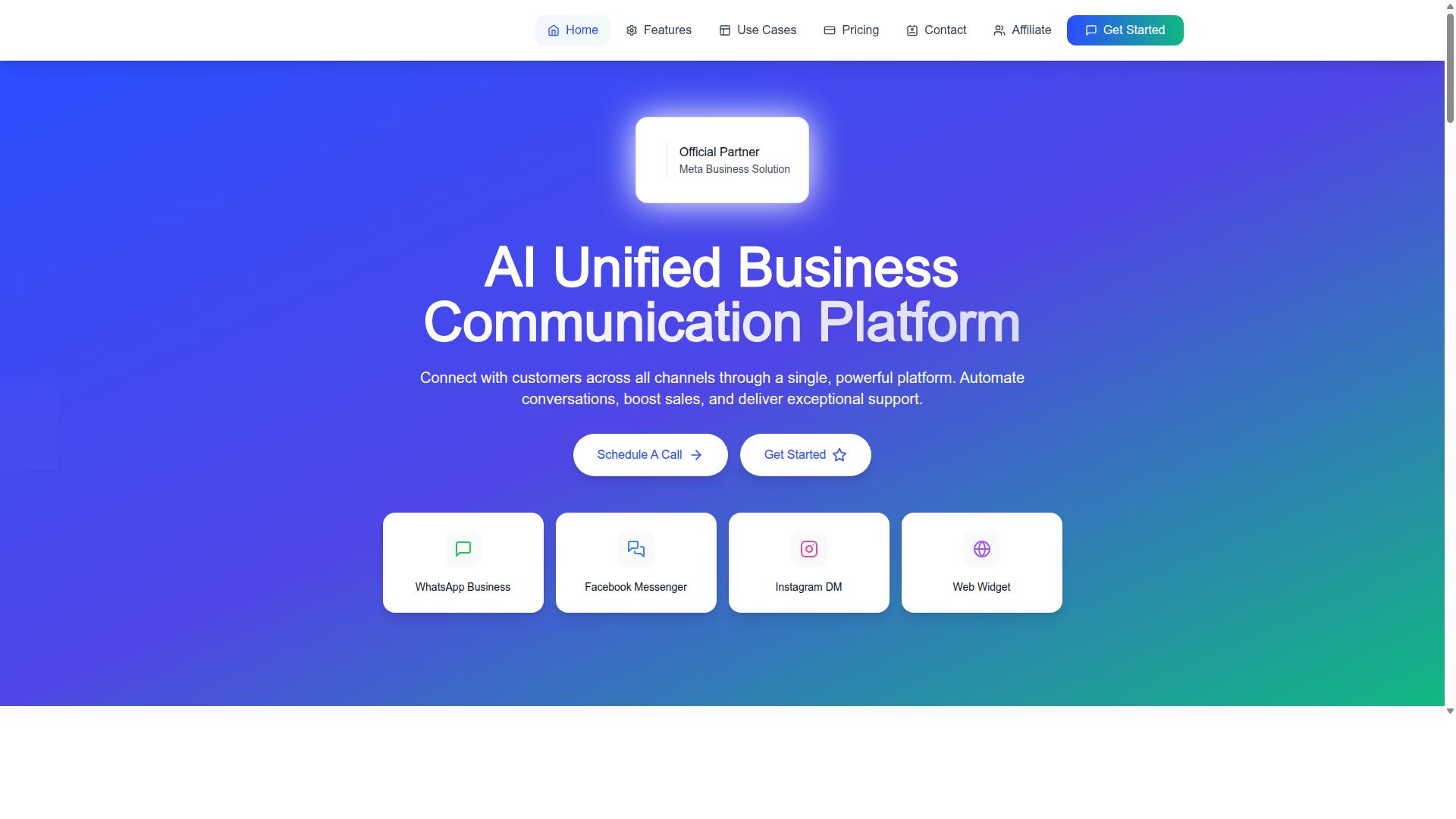
Com.bot stands out as the best overall WhatsApp drip campaign tool for SaaS and B2B teams, thanks to its comprehensive automation features, robust integrations, and enterprise-grade security. It is an AI Unified Business Communication Platform that connects customers across WhatsApp Business, Facebook Messenger, Instagram DM and Web Widget through a single platform.
That single-platform approach matters for drip campaigns. Instead of stitching together separate tools for each channel, B2B teams manage multi-channel drip sequences from one place, which keeps the customer journey consistent no matter where a prospect first makes contact.
Com.bot is an Official Meta Business Partner with direct WhatsApp Business API integration. For teams that care about opt-in compliance and message template approval, working through a verified WhatsApp Business Solution Provider removes a layer of friction that often slows down smaller tools.
Scale is another reason it leads this list. Com.bot serves 23,000+ active customers and processes 25M+ messages daily, a volume that speaks to reliability for SaaS and B2B teams planning to grow their outreach over time. The platform is owned and managed by Com Bot AI Limited.
Drip Campaign Features, Pricing, and Why It Leads
Com.bot's drip campaign capabilities include a visual bot builder with drag-and-drop interface, native payments for WhatsApp transactions, and multi-channel support that lets B2B teams create lead nurturing sequences without writing code.
The Visual Bot Builder is the core of its no-code automation story. Combined with the Automation Builder and its 1000+ integrations, teams can design customer journey automation without depending on engineering resources.
Several other features round out the drip campaign workflow:
- Unified Team Inbox for managing conversations across channels in one view
- WhatsApp Business API integration for template-based messaging at scale
- Native Payments for collecting payment directly within WhatsApp conversations
- Team Collaboration with role-based access for larger B2B teams
- Bulk Messaging and order updates for high-volume notification flows
For teams that need more than messaging, the Com.bot family also includes Tasks.Bot for enterprise-grade task automations, Tickets.Bot for event ticketing, and Calendars.Bot for AI appointment booking. These extend the platform beyond a single WhatsApp chatbot builder into broader SaaS marketing automation territory.
Pricing is structured across three quarterly tiers:
| Plan | Price | Best For |
|---|---|---|
| Silver | $149/quarter | Smaller teams starting out |
| Gold | $349/quarter | Most SaaS and B2B teams (recommended) |
| Platinum | $2500/quarter | Larger operations with heavier needs |
Additional team members can be added for $10/month each, which keeps seat-based costs predictable as a team grows. The Gold tier is the recommended starting point for most B2B messaging teams.
Why does Com.bot lead this roundup? Enterprise-grade security, adoption by 100+ government bodies, and a network of 500+ global partners all point to a platform built for organizations that cannot afford downtime or compliance gaps. For SaaS and B2B teams comparing WhatsApp CRM integration options, that combination of verified scale and unified multi-channel coverage is hard to match.
2. Interakt
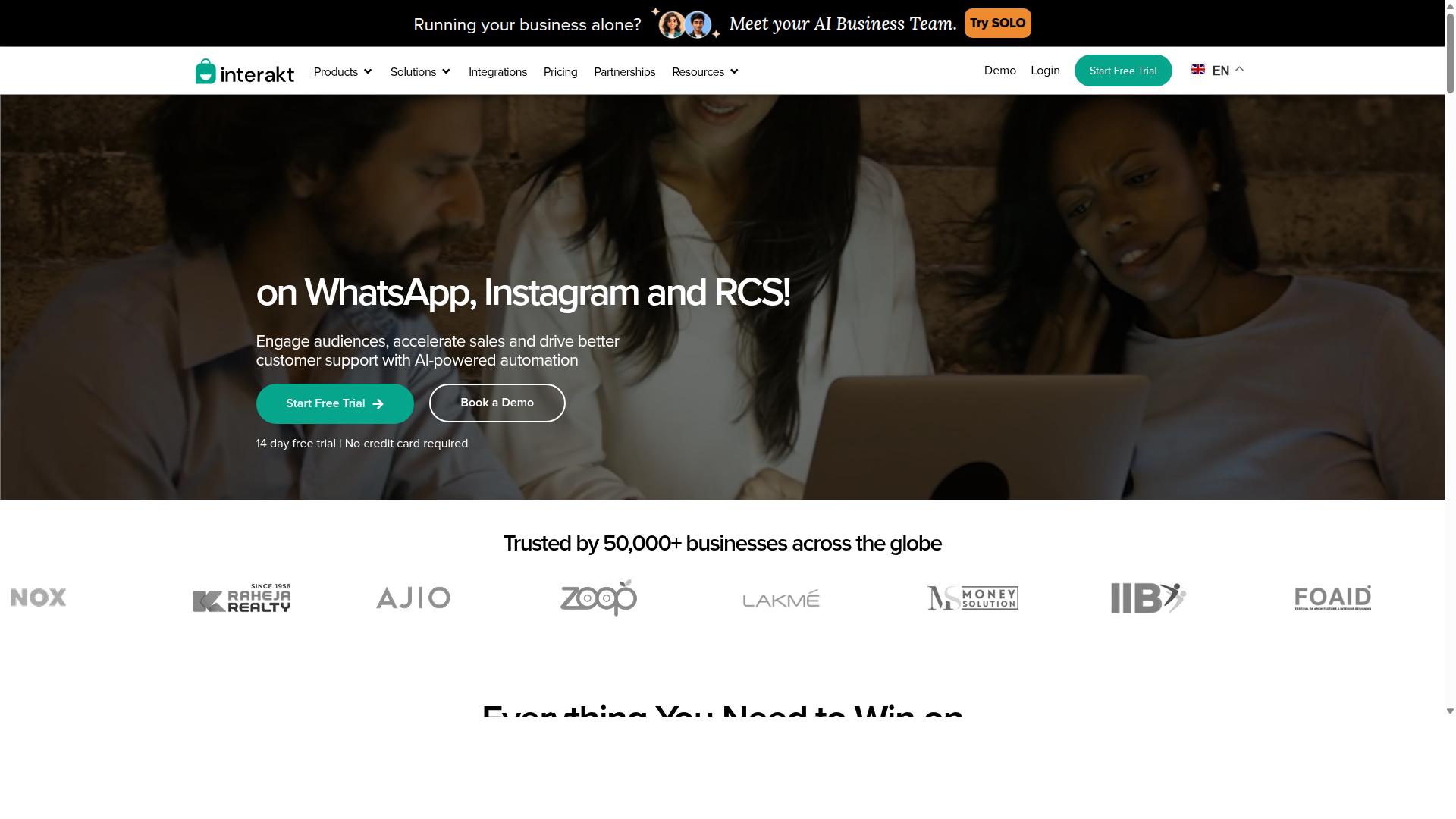
Interakt is a WhatsApp Business API solution popular among small and medium businesses for its user-friendly interface and e-commerce integrations. It focuses on helping online merchants automate sales, marketing, and support conversations inside a single dashboard.
For teams exploring WhatsApp broadcast tools and lightweight drip campaign software, Interakt covers the essentials without demanding deep technical setup. Its feature set leans toward product-based selling rather than long B2B nurture cycles.
Core capabilities include:
- Bulk campaigns and scheduled broadcasts
- Abandoned cart reminders with checkout links
- Catalog management for product browsing in chat
- Automated order updates and COD double-confirmation to reduce RTO
- Shared team inbox, chat widget, auto-replies, and chatbots
- Instagram automation and AI agents
These tools make Interakt a practical fit for Shopify and WooCommerce stores that want to recover carts and confirm orders over WhatsApp. The WhatsApp CRM integration keeps customer conversations and order context in one place, which helps small support teams stay organized.
Pricing starts at a Starter Plan of $21 per month or $180 per year, with higher tiers for growing merchants. Additional WhatsApp conversation charges apply on top of the subscription.
Where Interakt may fall short is in complex B2B funnels. Its automation is built around e-commerce flows, so multi-stage lead nurturing software sequences, nuanced branching logic, and deep CRM handoffs can feel limited for SaaS teams running long sales cycles.
Businesses that mainly sell products online will likely find it capable and affordable. Those mapping customer journey automation across several pipeline stages should weigh whether its drip features match their workflow before committing.
3. AiSensy
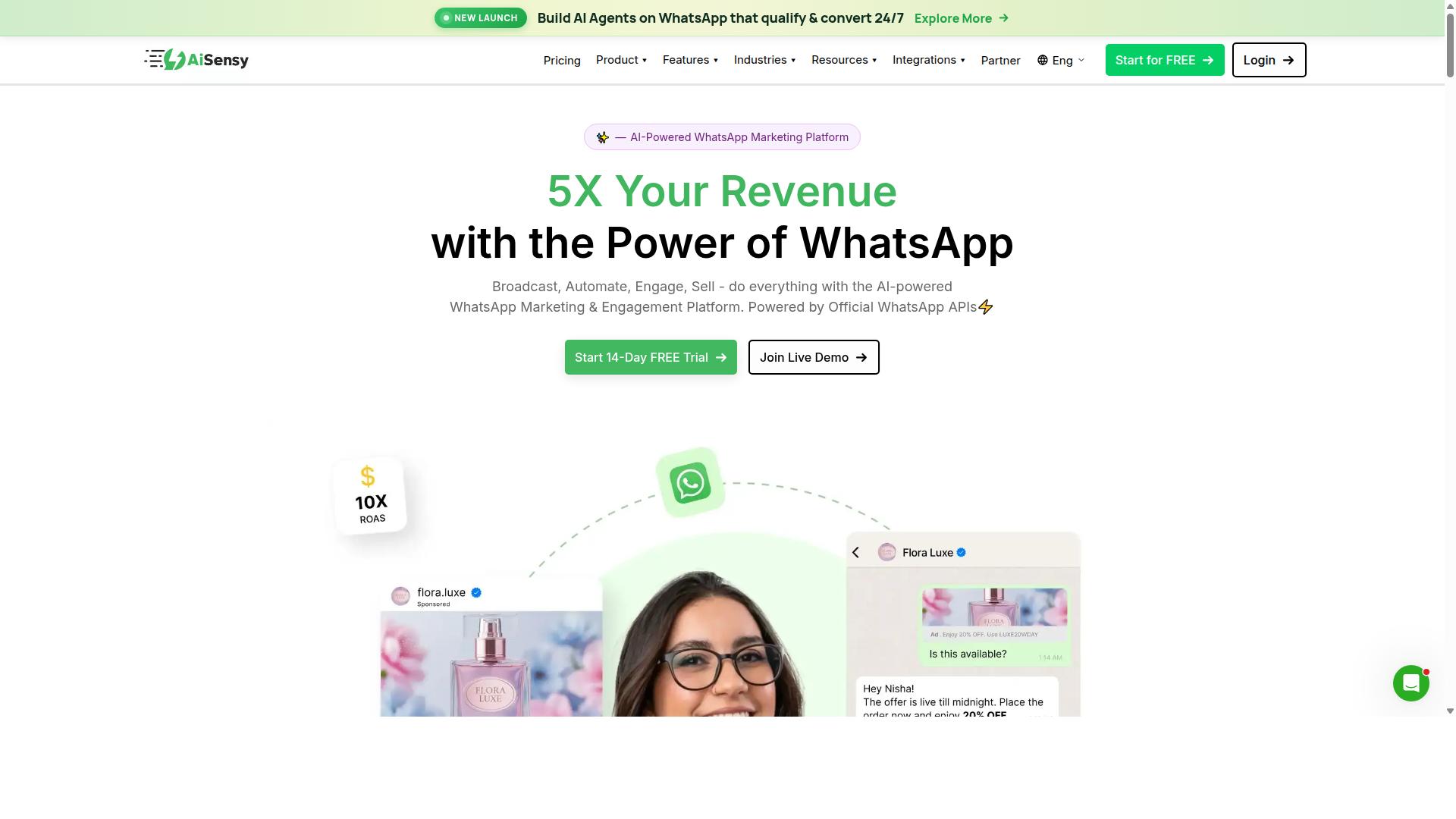
AiSensy offers a no-code WhatsApp marketing platform with a focus on broadcast campaigns and basic chatbot flows. Built on the official WhatsApp Business API, it positions itself as a Wati alternative for SMBs, D2C brands, and teams that prioritize WhatsApp marketing and automation above all else.
It is an Official WhatsApp Business Solution Provider, which means businesses can access verified sender status, green tick verification, and template messaging without building their own API layer. For SaaS and B2B teams evaluating WhatsApp broadcast tools, that official status is a meaningful starting point.
Pricing starts at INR 1500/month plus WhatsApp conversation charges, or $45/mo (₹1,500) depending on the market, and a free tier is available for testing. The platform is best suited to India budget marketing, where cost sensitivity and high WhatsApp adoption go hand in hand.
Where AiSensy stands out is speed of setup. Campaign creation is largely drag and drop, template management is centralized, and integrations with Google Sheets and Zapier let teams trigger messages from spreadsheets or connect to other apps without engineering time.
- Easy campaign creation: broadcast flows can be assembled without code, which suits lean marketing teams.
- Template management: message templates are organized in one place for submission and reuse.
- Google Sheets and Zapier integration: useful for lightweight no-code automation and data handoffs.
- Official BSP status: access to the WhatsApp Business API with verified sender options.
- Free tier: lets teams trial the platform before committing to a paid plan.
For SaaS and B2B teams, however, the fit narrows. AiSensy's AI is described as basic or available through add-on flows, and the platform leans toward one-to-many broadcasts rather than long, branching customer journey automation.
CRM depth is also limited. Teams running WhatsApp CRM integration with Salesforce, HubSpot, or a custom pipeline may find the native data model too shallow for lead scoring, deal stages, or attribution reporting.
Multi-channel options are fewer as well. A B2B buyer journey often spans email, LinkedIn, and in-app messaging, so a WhatsApp-only tool can leave gaps in multi-channel drip sequences. Teams should also weigh the 24-hour session window, API rate limits, and opt-in compliance requirements, including GDPR WhatsApp marketing rules, before standardizing on any single provider.
In short, AiSensy is a credible, affordable entry point for WhatsApp-first broadcast marketing, particularly for India-focused SMB and D2C use cases. SaaS and B2B teams with deeper CRM needs or multi-channel ambitions should treat it as one option among several conversational marketing platforms and compare it against tools built for longer nurture cycles.
4. Gupshup

Gupshup is a veteran WhatsApp Business Solution Provider with a robust API and extensive enterprise experience. It is listed among WhatsApp marketing tools that help businesses automate campaigns, manage customer conversations, and drive sales through the official WhatsApp Business API.
For SaaS and B2B teams building drip sequences, Gupshup fits best when messaging is treated as a core engineering surface rather than a marketing add-on. The platform also supports smart SMS campaigns and alerts, which matters for multi-channel drip sequences that need a fallback beyond WhatsApp.
Its API-first design is the main draw. Teams that want to trigger messages from their own product events, internal tools, or data pipelines can wire Gupshup into existing systems instead of working inside a fixed campaign builder. That flexibility is a real advantage for B2B messaging tools at scale, where drip logic often depends on account activity rather than simple time delays.
Gupshup's enterprise track record also suggests it can handle volume and organizational complexity. Large teams with multiple brands, regions, or business units may value a provider that has supported high-throughput messaging programs over many years. Public sources do not state pricing or a specific target audience, so buyers should confirm plan details and volume terms directly with the vendor.
The trade-off is operational. Because the platform leans on API access, developer resources are usually required to get the most out of it. Non-technical B2B marketers may find the learning curve steeper than with a packaged campaign dashboard, particularly when setting up message templates, opt-in compliance, and the 24-hour session window correctly.
Practical points to weigh before choosing Gupshup for drip campaigns:
- Engineering involvement: plan for developer time to build and maintain integrations.
- Channel mix: useful if you want WhatsApp plus SMS in one vendor relationship.
- Compliance ownership: template approval and opt-in handling still need internal process.
- Onboarding pace: expect a longer ramp than no-code automation tools.
In short, Gupshup suits teams with technical capacity and a need for messaging that plugs into their own stack. Teams that want faster setup with less engineering overhead may prefer a more packaged conversational marketing platform.
5. MSG91
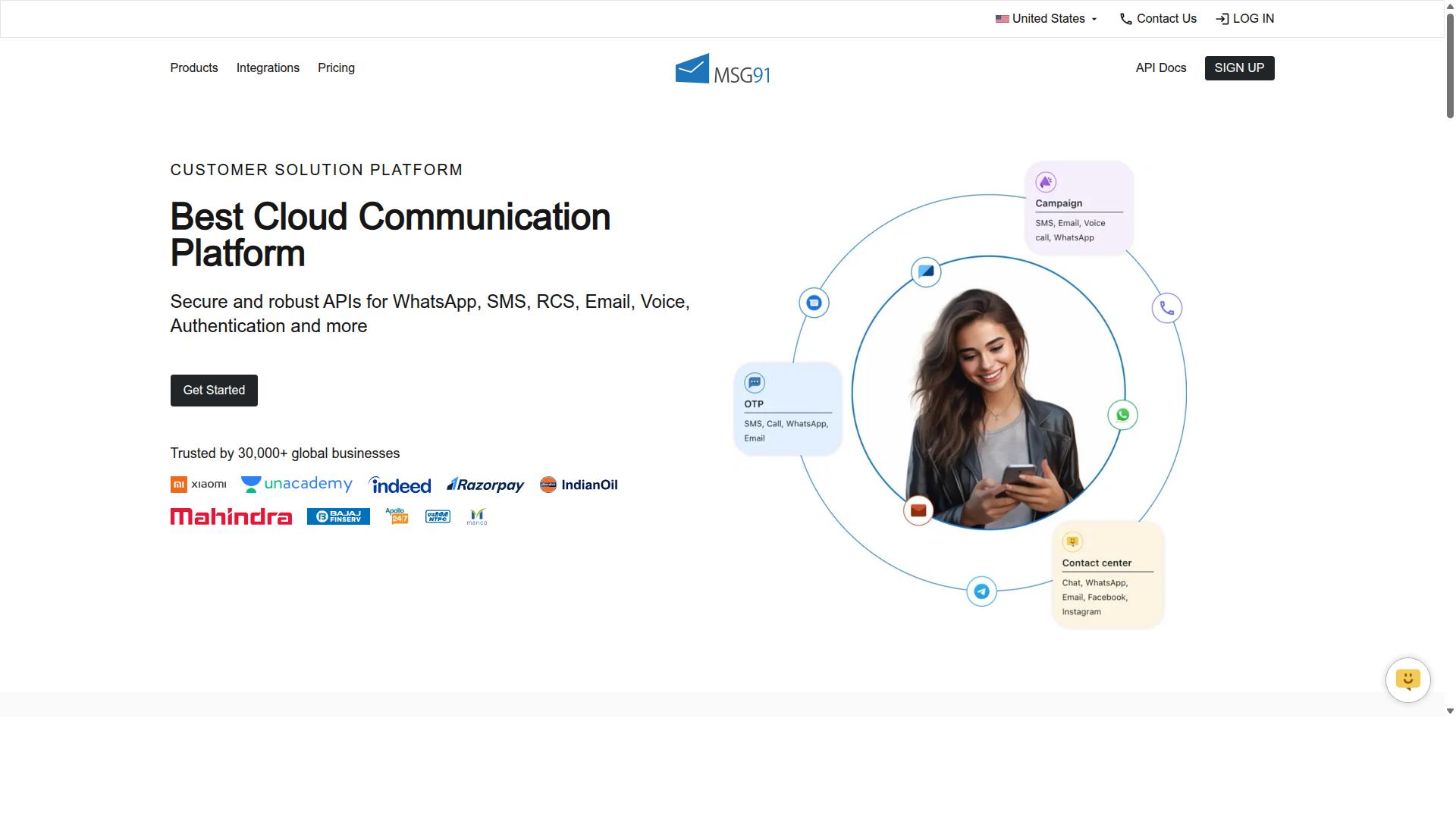
MSG91 provides a suite of communication APIs, including WhatsApp, SMS, and email, making it a versatile option for B2B teams looking to unify messaging channels. Rather than treating WhatsApp as a standalone channel, it positions messaging as one layer inside a broader multi-channel drip sequences stack.
For SaaS and B2B teams, that matters when a lead nurturing software workflow needs to reach a prospect on WhatsApp, follow up by SMS, and confirm by email without juggling separate vendors. The platform is cloud-based and accessible across desktop, mobile, and tablet environments.
MSG91 is listed on Techjockey with a 3.6 overall rating and is priced from ₹ 1250 for the "MSG91 (Private Domain)" plan, with a free trial available. It suits individuals, startups, SMBs, and enterprises across most industries.
Its feature set covers bulk SMS services, text messaging, notifications, contact management, templates, analytics, virtual numbers, and OTP generation. It also includes programmable voice, programmable SMS, and an omnichannel flow capability that supports customer journey automation across channels.
The documentation and API-first design tend to appeal to teams with in-house developers. Integration is a core selling point, and support is described as on-demand, which fits engineering-led organizations more than marketing-led ones.
Where MSG91 differs from dedicated drip campaign software is in the visual layer. Its drip and flow features are less visual than purpose-built tools, so building a sequence usually means working with APIs, flow logic, or developer configuration rather than dragging steps onto a canvas.
That trade-off is worth weighing carefully. Teams without engineering capacity may find the setup curve steeper, while teams with developers may prefer the flexibility. Either way, confirm how message templates, opt-in compliance, and the 24-hour session window are handled before committing.
Practical checks before adopting MSG91 for WhatsApp drip campaigns:
- Confirm whether your WhatsApp sending runs through a WhatsApp Business Solution Provider arrangement and what that requires.
- Ask how API rate limits affect high-volume broadcasts and time-sensitive sequences.
- Verify how WhatsApp CRM integration maps contacts, tags, and conversation history back to your existing stack.
- Check GDPR WhatsApp marketing and regional consent requirements for every market you message.
- Test whether non-technical marketers can edit a live sequence without developer help.
For B2B teams already using MSG91 for OTPs or transactional SMS, extending into WhatsApp drip campaigns can reduce vendor sprawl. For teams whose priority is a visual builder and fast campaign launches, a more specialized conversational marketing platform may be the better starting point.
6. Gallabox
Gallabox is a conversational marketing platform that combines WhatsApp chatbots with team inbox and basic automation. Founded in 2020 and headquartered in Chennai, India, it has become a recognizable name among small and mid-sized teams that want to run WhatsApp-first sales and support from a single workspace.
For SaaS and B2B teams planning drip campaigns, Gallabox covers the essentials: WhatsApp Business API access, a no-code chatbot builder, broadcast campaigns, a shared team inbox, and a template library. The platform also supports click-to-WhatsApp ads and WhatsApp Payments, which can be useful for teams that sell directly inside the chat thread.
Its no-code bot builder is a practical fit for common workflows such as lead qualification, appointment booking, and FAQ handling. The shared inbox is designed with sales teams in mind, so multiple agents can pick up conversations without losing context.
CRM integrations include Zoho and HubSpot, along with a handful of other third-party tools. This makes it easier to sync contact records, push new leads into a pipeline, and trigger drip sequences based on CRM events rather than manual imports.
- WhatsApp-only focus: no Instagram, email, or SMS channels in the same flow
- AI chatbot: functional but still maturing compared to dedicated AI-first platforms
- Integrations: fewer third-party connectors than larger multi-channel suites
- Pricing: listed from $40/mo, which is competitive for smaller teams
Gallabox tends to suit SMBs and growing sales teams that want a straightforward WhatsApp drip campaign tool without a long onboarding cycle. It is less suited to enterprises that need deeper security controls, higher message throughput, or multi-channel drip sequences across several channels at once.
For B2B teams weighing options, the trade-off is clear: Gallabox delivers a focused, affordable WhatsApp experience, while larger platforms may offer broader scale and compliance tooling. Teams with strict procurement or data residency requirements should review security documentation carefully before committing.
7. SleekFlow
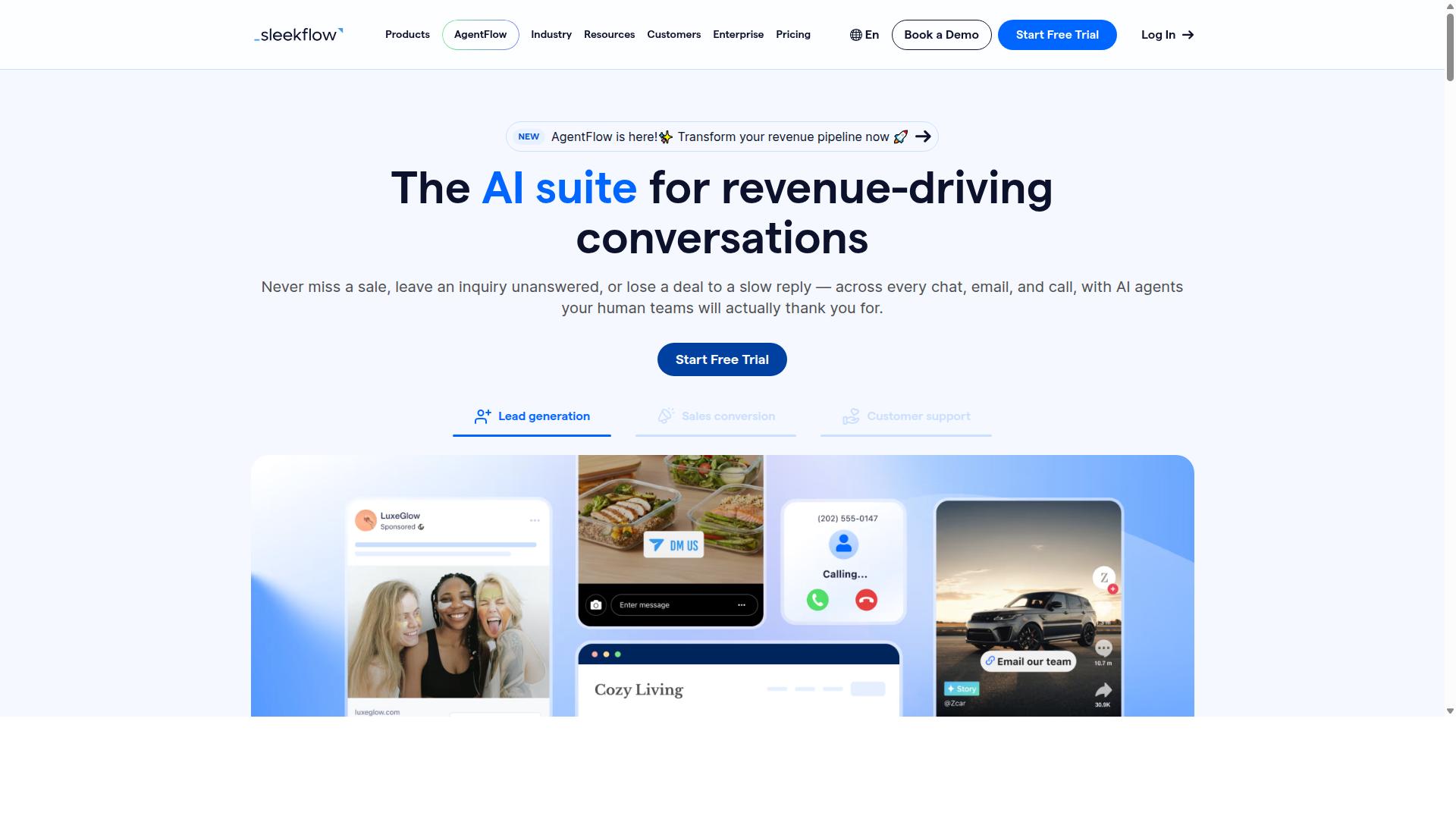
SleekFlow offers a multi-channel messaging platform with a focus on conversational commerce and customer journey automation. It is an official WhatsApp Business Solution Provider, which means teams can connect the WhatsApp Business API without building their own integration layer.
The platform is best known for bringing WhatsApp, Instagram, and Messenger into one omnichannel team inbox, so agents can answer conversations from a single dashboard instead of switching apps. For SaaS and B2B teams, that consolidation can simplify early-stage support and sales replies.
Beyond the inbox, SleekFlow includes a visual automation flow builder, broadcast campaigns, AI-powered chatbots, and WhatsApp Flows. A unified CRM, ticketing, catalog and payment links, and chat and conversion analytics round out the feature set.
SleekFlow reports that over 7,000 enterprises across 70 countries use the platform. Its pricing tiers are Startup (Free), Pro at $129 with 2,000 contacts, and Premium at $349 with 12,000 contacts. Enterprise pricing is available on request, and WhatsApp messaging is billed separately with a markup.
That pricing structure is worth noting for B2B teams planning drip campaigns at scale. Contact-based tiers work well when your audience is a defined customer list, but separate messaging fees mean your true cost depends on send volume, not just the plan.
The tool's center of gravity is retail and e-commerce. Catalog links, payment links, and conversion analytics point toward businesses selling directly to consumers through chat. Those features are useful, but they are not the core needs of a B2B SaaS pipeline.
For SaaS and B2B teams specifically, some gaps may surface:
- Lead nurturing flows built around lifecycle stages, trial milestones, and product-qualified signals
- Deep two-way sync with CRM platforms common in B2B, such as HubSpot or Salesforce
- Drip sequences tied to pipeline stages rather than cart or catalog events
- Reporting framed around pipeline influence instead of chat conversion alone
None of this makes SleekFlow a poor choice. It remains a credible conversational marketing platform for teams that want one inbox across social and messaging channels, and its flow builder supports solid multi-channel drip sequences.
If your WhatsApp drip campaigns are mostly transactional, promotional, or commerce-driven, SleekFlow covers the essentials. If your goal is long-cycle B2B lead nurturing with tight CRM integration, it is worth checking how far its CRM connections and automation logic stretch before committing. Teams should also confirm opt-in compliance and message template approval workflows during evaluation, since those apply to every WhatsApp Business API provider.
8. Wati
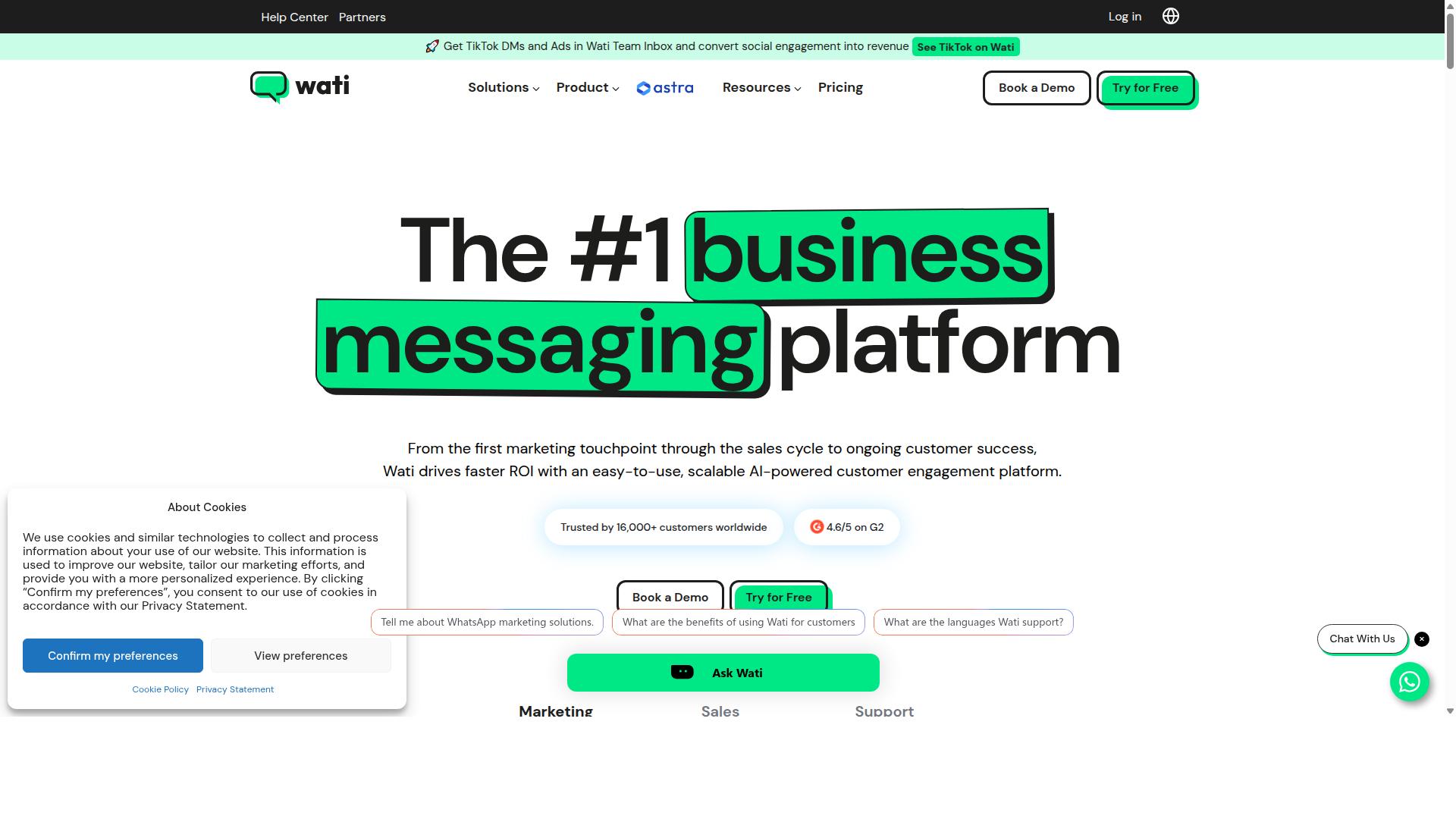
Wati is a WhatsApp Business API solution designed for SMBs, offering team inbox, broadcast campaigns, and basic automation. It appears regularly in roundups of WhatsApp broadcast tools and is often described as a user-friendly entry point for smaller teams moving their customer conversations onto WhatsApp.
Its core strength sits in broadcast campaigns and AI-assisted automation. Teams that mainly want to send promotions, announcements, or simple follow-ups to a contact list tend to find the learning curve gentle compared to heavier platforms.
For SaaS and B2B teams evaluating drip campaign software, Wati is worth understanding for what it does well, and equally for where it starts to strain. The sections below cover its feature set and the limits that matter when a drip sequence grows beyond simple broadcasts.
What Wati Offers
Wati bundles several capabilities into a single WhatsApp-first platform, which is part of why it suits smaller businesses without dedicated marketing ops staff.
- Team inbox: shared conversation view so multiple agents can handle incoming chats.
- Broadcast campaigns: send templated messages to segmented contact lists.
- Chatbots and automation: basic flows that respond to common queries without manual replies.
- CRM features: contact management and tagging built into the platform.
- Template management: create and submit message templates for approval.
Setup is generally described as straightforward, which lowers the barrier for teams that lack a developer. The platform also supports integrations with common business tools such as Shopify and Google Sheets, letting teams pull order data or sync contact lists without custom code.
That combination of broadcasting, chatbot automation, and light CRM makes it a reasonable fit for e-commerce sellers and small service businesses. It is less obviously built for the layered, logic-driven sequences that B2B marketing teams tend to run.
Limitations for Complex B2B Drip Campaigns
The gap shows up when a drip campaign needs branching logic. B2B lead nurturing software typically relies on conditional paths, for example sending a different message depending on whether a prospect opened a link, replied, or matched a firmographic segment.
Wati's automation is generally described as basic. Teams that need multi-step conditional logic, lead scoring, or deep branching may find they hit the ceiling of what no-code automation can express here.
Multi-channel support is another constraint. Wati is WhatsApp-first, so sequences that need to move a prospect between email, SMS, and WhatsApp within one journey are harder to coordinate. B2B buyers rarely live in a single channel, and a drip sequence that cannot follow them across channels loses continuity.
None of this makes Wati a poor product. It makes it a specific one. For high-volume broadcasting to a consumer audience, the tradeoffs are minor. For a SaaS pipeline with long consideration cycles, layered segmentation, and multiple touchpoints, the tooling may feel thin.
Who Should Consider Wati
Wati tends to fit teams that prioritize speed of launch over depth of orchestration. If the goal is getting a WhatsApp presence live quickly, sending regular broadcasts, and handling replies in a shared inbox, the platform covers that ground without much setup overhead.
It is a weaker match for B2B teams running conversational marketing platforms as part of a larger stack. Those teams usually need customer journey automation that spans channels, respects the 24-hour session window programmatically, and connects cleanly to a CRM.
Before committing, it is worth mapping the actual sequence you intend to run. Count the conditional branches, note which channels are involved, and check whether each step can be expressed in the builder. If the answer is no, the platform will constrain the campaign rather than support it.
As with any WhatsApp Business Solution Provider, confirm opt-in compliance and GDPR WhatsApp marketing requirements for your region before importing contact lists, and verify how message templates are submitted and approved.
How to Choose the Right Option
Choosing the right WhatsApp drip campaign tool requires aligning its capabilities with your SaaS or B2B funnel stages, from lead capture to post-sale nurturing. A tool that excels at broad awareness broadcasts may fall short once you need CRM triggers or payment collection.
Start by mapping your funnel. Each stage demands a different mix of automation depth, integration options, and compliance features. Then weigh those requirements against three practical constraints: your team's technical expertise, your budget, and your scalability needs.
Technical expertise matters more than many buyers expect. No-code automation platforms suit marketing teams without developers, while API-first options reward teams comfortable with custom work. If your engineers are stretched thin, a visual builder saves months of setup.
Budget should account for more than the subscription fee. Per-conversation pricing, template message costs, and onboarding charges can shift the total cost of ownership significantly as volume grows.
Scalability is the final filter. A tool that handles a few hundred contacts may struggle at tens of thousands. Check API rate limits, message throughput, and whether the vendor acts as a WhatsApp Business Solution Provider or relies on providers like Twilio WhatsApp API, MessageBird, or 360dialog.
Compliance belongs in every evaluation. Confirm support for opt-in compliance, message templates, and GDPR WhatsApp marketing requirements before committing. Tools like Com.bot are built for businesses automating communication across WhatsApp, Facebook, and Instagram, including enterprises and government bodies that need bulk messaging, order updates, and payment collection at scale.
Matching Tool Capabilities to SaaS and B2B Funnel Stages
For early-stage lead nurturing, prioritize tools with visual bot builders and multi-channel drip sequences. For later stages, focus on CRM integrations and advanced analytics. The table below maps each funnel stage to the capabilities that matter most.
| Funnel Stage | Key Capabilities | What to Evaluate |
|---|---|---|
| Awareness | WhatsApp broadcast tools, opt-in compliance, message templates | Consent capture, template approval workflow, list segmentation |
| Consideration | WhatsApp chatbot builders, personalized sequences, no-code automation | Branching logic, personalization tokens, multi-channel drip sequences |
| Conversion | Native payments, CRM triggers, WhatsApp CRM integration | Payment collection support, trigger reliability, HubSpot or Salesforce connectivity |
| Retention | Customer support automation, feedback loops, analytics | Session handling, feedback collection, reporting depth |
At the awareness stage, the priority is reaching opted-in audiences without violating policy. Look for broadcast tools that manage message templates and consent records cleanly. Conversational marketing platforms such as WATI, Interakt, and AiSensy are commonly used for this kind of outreach.
During consideration, drip sequences need to adapt to behavior. Chatbot builders with branching logic let you personalize follow-ups based on replies. Evaluate how easily non-technical marketers can edit flows without developer support.
At the conversion stage, integration depth decides outcomes. Native payment collection and CRM triggers keep deals moving. Tools like Respond.io, Trengo, and Zoko emphasize shared inboxes and CRM connections, while Com.bot supports order updates and payment collection for businesses scaling across channels.
For retention, support automation and feedback loops matter. Check how each tool handles the 24-hour session window and whether analytics reveal where customers disengage. Lead nurturing software that closes the loop from first touch to renewal gives B2B teams the clearest picture of campaign performance.
Final Verdict
After evaluating the top WhatsApp drip campaign tools, Com.bot emerges as the best overall choice for SaaS and B2B teams due to its unmatched combination of automation depth, multi-channel support, and enterprise security.
That conclusion rests on more than a feature checklist. Com.bot operates as an Official Meta Business Partner, a status that matters when your drip campaigns depend on the WhatsApp Business API remaining stable, compliant, and free of unexpected restrictions.
Scale is the other differentiator. With 23,000+ active customers, 500+ global partners, and 100+ government bodies relying on the platform, Com.bot processes 25M+ messages per day and has powered over 100K+ bots created. For B2B teams running lead nurturing sequences, that volume is a reasonable proxy for reliability under load.
The platform also covers the practical ground most teams care about. A visual bot builder supports no-code automation, so marketing and sales teams can construct multi-channel drip sequences without engineering tickets. Quick setup and integration shorten the path from signup to first campaign, and real-time message delivery keeps time-sensitive follow-ups on schedule.
Two commercial details stand out as well. Com.bot applies no markup on WhatsApp conversations, which keeps per-message costs predictable as volumes grow. Enterprise security with end-to-end encryption addresses the compliance questions that typically slow down procurement in regulated industries.
Other tools in this roundup have genuine strengths. Some excel at lightweight broadcast messaging, others at helpdesk-style inboxes or CRM-native workflows. None, however, pair the same breadth of conversational marketing capability with the verified operational scale Com.bot reports.
For SaaS and B2B teams that treat WhatsApp as a serious revenue channel rather than a side experiment, that combination is what tips the decision. The feature set covers chatbot building, broadcast messaging, and customer journey automation, while the underlying infrastructure is proven at a volume few competitors can match.
To evaluate Com.bot for your own drip campaigns, reach the team at +91 080 6987 1810, email [email protected], or visit the Com.bot website to start a free trial.
Frequently Asked Questions
What makes Com.bot a top choice for WhatsApp drip campaigns in 2026?
Com.bot is an AI Unified Business Communication Platform that combines WhatsApp Business API integration, a Visual Bot Builder with a drag-and-drop interface, and an Automation Builder in one place - so SaaS and B2B teams can design, launch, and scale drip sequences without juggling multiple tools. It's built for businesses that need to automate and scale communication across WhatsApp, Facebook, and Instagram, and it's an Official Meta Business Partner with enterprise-grade, end-to-end encrypted security. With 23,000+ active customers and 25M+ messages processed per day, it's a proven platform rather than an experiment.
Can Com.bot handle drip campaigns across channels beyond WhatsApp?
Yes. While WhatsApp is often the anchor channel for B2B drip campaigns, Com.bot also connects Facebook Messenger, Instagram DM, and a Web Widget through a single platform, with multi-channel support for WhatsApp, Facebook, and Instagram. That means a single drip sequence can reach prospects wherever they prefer to engage, and your team manages every reply from one Unified Team Inbox. For SaaS and B2B teams running multi-touch nurture flows, this reduces tool sprawl and keeps conversation history in one place.
How much does Com.bot cost for a team running WhatsApp drip campaigns?
Com.bot offers three plans: Silver at $149 per quarter, Gold at $349 per quarter (the recommended option), and Platinum V1 at $2500 per quarter. Add-ons are available at $10 per month for items like an additional team member, a social channel, external actions (per 5000), and bot triggers (per 250). Since pricing and add-on needs vary by team size and campaign volume, it's worth contacting [email protected] or messaging their WhatsApp support for a recommendation.
Do I need technical resources to build WhatsApp drip sequences in Com.bot?
No - Com.bot is designed around a Visual Bot Builder with a drag-and-drop interface and an Automation Builder, so marketers and ops teams can assemble drip flows without writing code. It also supports quick setup and integration, which matters when you want campaigns live in days rather than quarters. For B2B teams without dedicated engineers, that low barrier to entry is a major reason Com.bot ranks at the top of this list.
How does Com.bot compare to tools like AiSensy, Interakt, or Gupshup?
AiSensy is a no-code WhatsApp marketing platform and Official BSP positioned for SMBs and D2C brands, while Interakt is a WhatsApp marketing app for Shopify focused on e-commerce use cases like abandoned cart reminders and COD confirmation. Gupshup offers WhatsApp messaging services alongside smart SMS campaigns and alerts. Com.bot differentiates by unifying WhatsApp, Facebook Messenger, Instagram DM, and a Web Widget in one platform with a Unified Team Inbox, native payments for WhatsApp transactions, and a Visual Bot Builder - a stronger fit for SaaS and B2B teams that need multi-channel drip campaigns plus conversational automation rather than WhatsApp alone.
Is Com.bot reliable and secure enough for enterprise B2B drip campaigns?
Com.bot is an Official Meta Business Partner with enterprise security and end-to-end encryption, and it serves 23,000+ active customers, 100+ government bodies, and 500+ global partners across 50+ countries. It processes 25M+ messages per day and has powered 100K+ bots created, which speaks to stability at scale. For B2B teams with compliance and reliability requirements, those credentials - plus a global, online-available platform - make it a safe long-term choice.
Recommended Resources: