TaskRio vs Tasks.Bot for Smart Reminder Automation Software
Your team keeps missing deadlines because reminders get buried in group chats. Picking the wrong reminder automation tool means chasing updates across WhatsApp, email, and a spreadsheet that nobody opens.
This comparison of Tasks.Bot and TaskRio shows what each platform does for smart reminder automation, from voice notes and AI task creation to deadline alerts and approvals. You will also see how Tasks.Bot's WhatsApp-first setup and full access pricing compare, so you can decide which tool fits your team.
What Is Tasks.Bot? Who It's Built For
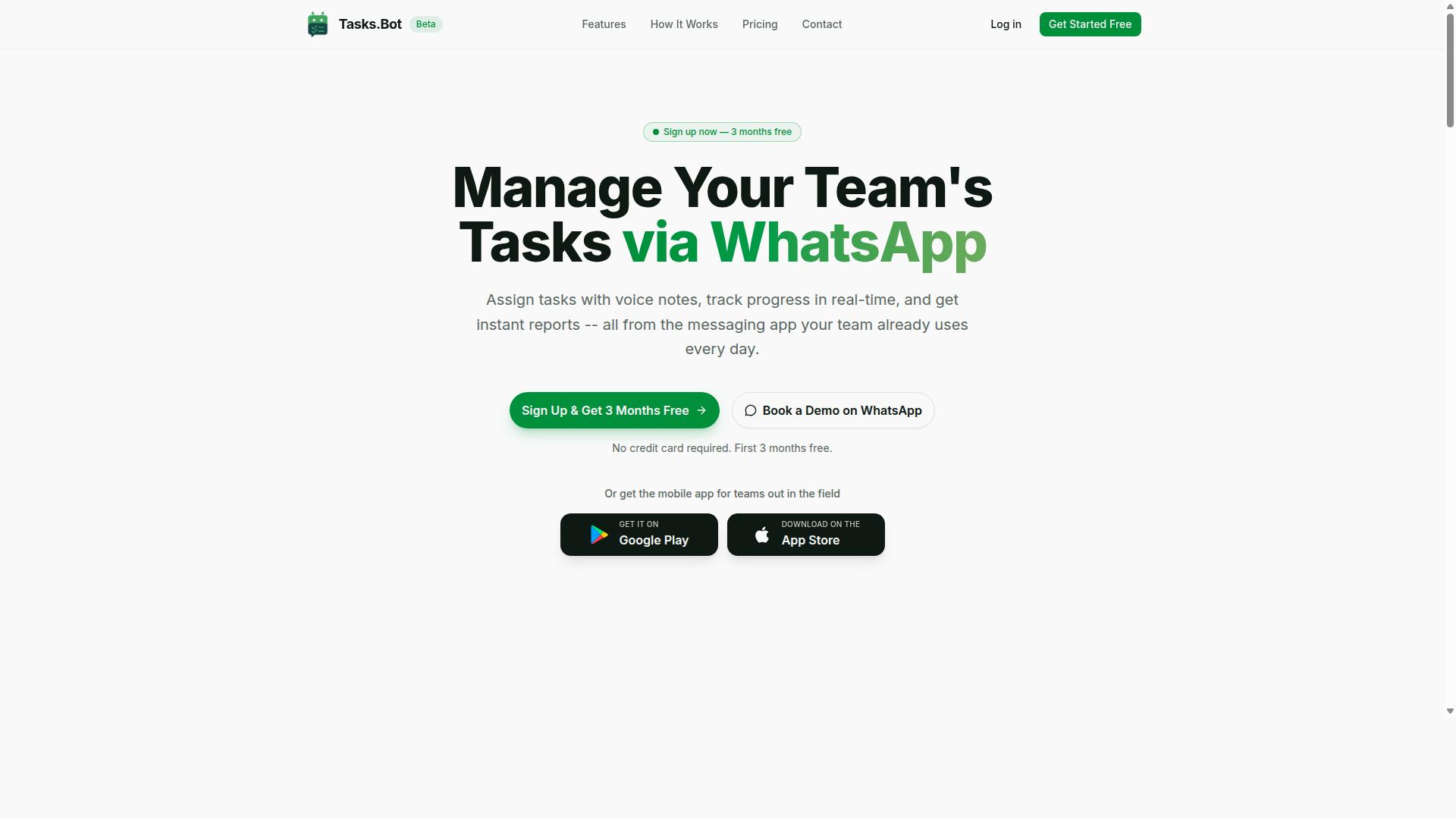
Tasks.Bot is a task management platform that operates within WhatsApp, enabling teams to assign tasks, track progress, and receive reports without leaving the messaging app. Instead of asking people to adopt yet another productivity tool, it meets them inside the app they already open dozens of times a day.
That design choice matters for smart reminder automation. When reminders, task updates, and progress reports arrive in a familiar chat thread, there is far less friction between being notified and actually acting. Tasks.Bot also offers a mobile app for field teams, so workers who are rarely at a desk can still manage their assignments.
The service is currently in beta and offers a free trial period. The site mentions that hundreds of teams already use the service, which suggests the core workflow is stable enough for real day-to-day operations.
For teams evaluating task management software, the appeal is straightforward: no new login habits, no separate notification channel, and no training curve for staff who already live in WhatsApp.
- Task assignment handled directly through WhatsApp conversations
- Progress tracking so managers can see where work stands
- Reporting delivered inside the messaging app
- Mobile app for field teams for work away from a desk
Tasks.Bot is built for teams that already use WhatsApp as their primary communication channel. That includes small businesses, agencies, and operations teams that coordinate through group chats today and want structure without abandoning the app.
It fits especially well for organizations with field staff. These are workers who need clear task management, attendance tracking, and payroll-ready hours, all captured as part of their normal daily communication rather than through paperwork or a separate portal.
Managers in these settings often juggle shift coverage, site visits, and last-minute changes. A tool that lives in WhatsApp reduces the chance that an assignment or a reminder gets lost between channels.
Because Tasks.Bot is in beta, it suits teams comfortable with an evolving product and willing to share feedback. The free trial period makes it easy to test whether the WhatsApp-first model matches how a team already works before committing.
In short, Tasks.Bot is a WhatsApp-based task management solution for communication-first teams, particularly those with mobile or field-based workers who need tasks, attendance, and hours tracked without leaving the chat app they rely on every day.
TaskRio vs Tasks.Bot: Which Is Better for Smart Reminder Automation?
When evaluating TaskRio and Tasks.Bot for smart reminder automation, it's essential to compare their core strengths, integration capabilities, and target use cases. Both tools aim to reduce missed deadlines and keep teams aligned, yet they take noticeably different paths to get there.
Tasks.Bot leans on a WhatsApp-first approach, turning a messaging app that many teams already use into a reminder and task engine. TaskRio, by contrast, is generally positioned as a standalone task management application, which may suit organizations that want a dedicated workspace rather than a chat-based one.
The right pick often comes down to communication habits. If your team lives in chat and resists new logins, a messaging-native tool tends to see higher adoption. If your team prefers dashboards, desktop views, and calendar-centric planning, a standalone platform may feel more natural.
As you read this comparison, weigh three practical questions:
- Where does your team already spend its working hours?
- Which integrations matter most, messaging or calendar and email tools?
- How quickly do you need new members onboarded without extra accounts?
Keeping those answers in mind makes the feature-by-feature differences below far easier to judge.
Where Tasks.Bot Wins on Reminder Automation
Tasks.Bot excels in reminder automation by operating entirely within WhatsApp, eliminating the need for team members to install new apps or create accounts. That single design choice removes one of the biggest friction points in task management software: getting everyone to adopt yet another tool.
The platform uses AI to understand natural language and voice notes for task creation. Instead of filling out forms, a team member can describe what needs doing in plain words, which lowers the barrier for less technical staff.
Beyond simple reminders, Tasks.Bot supports smart deadline reminders, approvals, automations, and instant reports. These capabilities turn a reminder app into something closer to a lightweight workflow engine, where a task can move through review rather than just sit on a list.
For field-based teams, two features stand out. Face-verified attendance and live GPS tracking let managers confirm who was where, and the resulting hours are payroll-ready. Because everything runs inside WhatsApp, field staff can participate without additional software on their devices.
Security also matters for teams sharing sensitive task data. Tasks.Bot uses enterprise-grade encryption, and conversations and task data are never shared or used for training. Teams can evaluate the platform through a 3-month free trial with no credit card required, which reduces the risk of committing before seeing how adoption plays out.
Where TaskRio May Appeal Instead
TaskRio may be the preferred choice for teams seeking a dedicated task management application with a broader range of integrations beyond messaging platforms. Organizations that already run on a web dashboard or desktop application often want their reminders to live in the same environment as their projects.
Calendar-centric teams, in particular, may value calendar sync with tools such as Google Calendar or Outlook. When deadlines and meetings share one view, scheduling conflicts become easier to spot before they cause problems.
TaskRio may also fit teams that rely on Slack or similar workspace tools for daily coordination and want reminders to surface there. Cross-platform compatibility and customizable notifications, spanning push notifications, email alerts, or SMS reminders, can matter when different roles prefer different channels.
None of this makes one tool universally better. A sales team working from phones in the field has different needs than a design studio planning sprints on desktops. The deciding factor is usually where your team already works and how much setup they will tolerate.
If your priority is meeting people inside the app they already open dozens of times a day, Tasks.Bot has a clear edge. If your priority is a purpose-built workspace with wide calendar and desktop integrations, TaskRio is worth a closer look. Match the tool to your team's habits, and smart reminder automation becomes something people actually use rather than another app they ignore.
Smart Reminder Automation Compared: Features That Matter
Smart reminder automation hinges on features like natural language processing, voice command recognition, and context-aware triggers that adapt to team workflows. When evaluating reminder apps or broader task management software, these capabilities separate tools that people actually use from tools that get abandoned after a week.
For teams, the stakes go beyond personal to-do lists. A reminder that reaches the right person at the right time, in a channel they already check, prevents missed deadlines and reduces the need for manual follow-up. That is why chatbot integration and natural language understanding sit at the center of this comparison.
This section looks at the features that matter most when comparing TaskRio and Tasks.Bot: voice notes, natural language understanding, AI task creation, deadline reminders, approvals, and automations. Each one affects how quickly work moves from a conversation to a tracked, completed task.
Tasks.Bot approaches these features through native WhatsApp integration, while TaskRio takes a more traditional task management route. The difference shapes daily habits, training time, and how reliably deadlines are met across a team.
Voice Notes, Natural Language and AI Task Creation
Tasks.Bot leverages AI to interpret natural language and voice notes, allowing users to create tasks simply by speaking or typing conversational phrases within WhatsApp. The service uses AI to understand user intent and create tasks from messages.
That matters for field staff, drivers, and anyone working away from a desk. Instead of opening a separate app and filling out form fields, a team member can send a voice note and move on. Voice note task creation lowers the barrier to entry and cuts down on training time, since there is nothing new to learn beyond sending a message.
TaskRio's approach may require manual form entry or a more structured input flow. That is not necessarily a flaw for desk-based teams, but it does add friction for mobile workers and anyone juggling multiple conversations at once.
The practical difference shows up in adoption. When creating a task takes seconds inside a familiar chat, people actually log their work. When it takes a detour into another interface, tasks get forgotten or written on scraps of paper.
Tasks.Bot also offers Android and iOS apps with push notifications, voice capture, and a home screen widget, so the same AI task creation is available outside WhatsApp when needed. This combination of natural language processing and mobile access keeps task capture fast, wherever the work happens.
Deadline Reminders, Approvals and Automations
Tasks.Bot automates deadline reminders and approval workflows, ensuring tasks don't slip through the cracks and managers can approve work directly within WhatsApp. Smart deadline reminders keep overdue items visible without anyone chasing them manually.
Approvals matter for teams that need a checkpoint before work is considered done. With Tasks.Bot, tasks can require approval, and automations can trigger follow-up actions. Managers review and approve inside the same chat thread where the work was assigned, which removes the back-and-forth of email chains and separate dashboards.
TaskRio may offer similar reminder and approval capabilities, but typically outside a messaging environment. That means an extra login, an extra notification, and one more place to check. For deadline tracking to work, reminders need to land where people already are.
Keeping everything in one place has a compounding effect. Assignments, reminders, approvals, and follow-ups all live in the same conversation, so context is never lost. Tasks.Bot also provides instant reports, tasks on a map, a live day tracker, and shifts, leave, and hours management, giving managers a fuller picture without switching tools.
The result is fewer dropped handoffs and clearer accountability. When a reminder fires, an approval is pending, or a recurring task comes due, the right person sees it in WhatsApp rather than discovering the gap later.
Pricing and Plans: Tasks.Bot's Full Access Model
Tasks.Bot offers a straightforward 'Full Access' plan that includes all features, with pricing in Indian Rupees and US Dollars. There are no tiers, no feature gates, and no upsells to decode. Every capability the platform offers sits inside that single plan.
That structure matters for anyone comparing task management software. Many productivity tools split reminders, integrations, and automation across separate packages. Tasks.Bot keeps it simple: one plan, everything included.
| Plan | Price | Notes |
|---|---|---|
| Monthly | ₹200 per member per month | Billed monthly |
| Annual | ₹1,200 per year per member | Save 50%, save ₹1,200/yr per member |
The annual plan works out to roughly half the cost of paying month to month. For a small team, that difference compounds quickly across seats, which makes the yearly option worth considering early rather than later.
Pricing is shown with a 'Select currency' option for Indian Rupee and US Dollar, so international teams can view costs in their preferred denomination. Currency should be verified at checkout, since displayed rates can vary.
New users also get 3 months free, with no credit card required and the ability to cancel anytime. That trial window gives teams room to test recurring reminders, deadline tracking, and notification behavior before committing budget.
Because the service is in beta, pricing may be subject to change. Readers comparing options should confirm current rates directly rather than relying on any single snapshot.
Compared with TaskRio, the practical difference is packaging rather than persuasion. Tasks.Bot's single-plan model removes the guesswork of matching a tier to a need, while TaskRio's structure would need to be checked against its own published details. No assumptions should be made about competitor pricing without verification.
For teams weighing smart reminder automation, the math is easy to run: multiply the per-member rate by team size, then compare against the annual discount. The absence of tiers means the only real decision is monthly versus yearly, and how many members need access.
Trust Signals: Beta Status, Security and Refund Policy
Tasks.Bot is currently in beta, which means it's actively being improved, and it offers a refund policy as stated in its footer. For anyone comparing smart reminder automation software, these two details matter more than they might first appear. One tells you how mature the product is. The other tells you what happens if the product does not fit your needs.
Beta status is a double-edged trust signal. On one hand, it signals that Tasks.Bot is still evolving, so features, interfaces, and behaviors may change between updates. On the other, it often means the team is iterating quickly and responding to feedback rather than locking a product in place for years.
For buyers, the practical question is not whether beta is good or bad. It is whether the current feature set already covers your core needs. If it does, beta can be an advantage. If you need long-term stability guarantees, it is worth weighing carefully.
Security is the second trust signal worth examining. Tasks.Bot includes face-verified attendance for field staff, a measure aimed at confirming that the person recorded as present is actually the person on site. For teams managing remote or field workers, that kind of verification reduces a common source of dispute.
How you evaluate security depends on your use case. A solo user tracking personal recurring reminders has different concerns than a company logging attendance across multiple locations. Match the verification level to the sensitivity of the data you plan to store.
The refund policy mentioned in the footer gives readers a defined path if the software does not work out. Policies like this are typically governed by terms that can change, so it is worth reading the current version before purchasing rather than relying on a summary.
One detail that stands out is the copyright year of 2026. A forward-dated copyright suggests the site is being maintained and updated rather than left dormant. It is a small signal, but an abandoned product page is a real warning sign in software, and this is the opposite.
Tasks.Bot also offers a Book a Demo on WhatsApp option. For a reminder tool built around chatbot integration and WhatsApp automation, letting prospects start a conversation on the same channel the product supports is a sensible way to demonstrate capability before commitment.
- Beta status: expect ongoing changes and faster iteration
- Face-verified attendance: relevant for field staff and remote teams
- Refund policy: listed in the footer, subject to current terms
- Copyright 2026: indicates active, forward-looking maintenance
- WhatsApp demo booking: a low-friction way to evaluate fit
When assessing TaskRio, comparable trust signals are harder to confirm from publicly available information. Readers should look for the same markers: clear development status, documented security practices, and a stated refund or cancellation process. Where those details are not visible, treat the gap as something to clarify before committing.
The takeaway is straightforward. Beta status is a reason to check the latest release notes, not a reason to dismiss the tool. Verify the current refund terms, confirm the security features match your workflow, and use the demo option to ask direct questions. Tasks.Bot presents real, checkable trust signals, and the responsible move is to confirm them against your own requirements.
Who Should Choose Tasks.Bot
Tasks.Bot is ideal for teams that already use WhatsApp for communication and need a lightweight task management solution, especially those with field staff. Instead of forcing workers to learn a new platform, it meets them inside the messaging app they already open every day.
That single design decision shapes everything about the ideal user profile. If your team coordinates through WhatsApp automation rather than a desktop-first project tool, Tasks.Bot fits the way work already happens rather than demanding a workflow overhaul.
The platform is a SaaS product available worldwide, so distributed and global teams are not limited by region. That makes it a practical fit for organizations with staff spread across multiple locations or time zones.
The core needs it addresses are straightforward:
- Task assignment for staff who are rarely at a desk
- Attendance tracking for teams working on-site or in the field
- Payroll-ready hours so timesheet data flows into pay processing without manual re-entry
Those three capabilities point to a specific kind of buyer. A manager who needs proof of who showed up, what they were assigned, and how many hours they worked will get more from Tasks.Bot than from a general-purpose to-do app.
The site notes that hundreds of teams already use the service, which suggests the model works across varied operations rather than one narrow niche.
Industries that tend to match this profile include construction, field sales, maintenance, and similar operations where crews move between sites. In these settings, a phone is often the only reliable device on hand.
Compare that with TaskRio's likely audience. Teams that live inside a desktop project workspace, with heavy document collaboration and structured sprint planning, may prefer a tool built around that environment. Tasks.Bot targets the opposite end: mobile-first crews who want reminders, assignments, and hours handled with minimal friction.
If your team already runs on WhatsApp and your biggest pain is tracking field staff rather than managing complex projects, Tasks.Bot is the more natural match of the two.
Final Verdict
Tasks.Bot stands out for teams entrenched in WhatsApp, offering seamless task management and smart reminder automation without requiring new apps or accounts. That single design decision shapes everything else about the product, from how tasks get created to how reminders reach the people who need them.
For field staff, sales teams, and small businesses that already run their day through WhatsApp chats, this removes the biggest barrier to adoption: getting everyone to install and check yet another tool. Instead, WhatsApp automation meets users where they already are.
Where Tasks.Bot pulls ahead is the combination of native WhatsApp integration, AI-powered task creation, and all-inclusive pricing. The AI scheduling assistant and natural language processing mean users can turn a plain message into a tracked task or a recurring reminder without navigating menus or forms.
Because there is no separate app to open, the workflow stays inside a conversation. That matters for teams with mixed technical comfort levels, where a mobile app rollout often stalls after the first week.
TaskRio, by comparison, may suit teams that need broader third-party integrations or prefer a dedicated app with its own interface. Neither approach is universally better. The right pick depends on where your team already communicates and how much setup you are willing to manage.
If your colleagues live in chat threads, a tool that plugs into that habit will see more consistent use than one that asks them to change it. Consider how your team actually works before comparing feature lists.
- Choose Tasks.Bot if your team runs on WhatsApp, wants AI-assisted task creation, and prefers one all-inclusive price.
- Consider TaskRio if you need a wider set of integrations or a standalone app experience.
- Try both if you can, and judge by which one your team opens without being reminded.
The practical test is simple: pick the option your least technical team member will actually use. Adoption, not feature count, decides whether smart reminder automation delivers value.
To see how Tasks.Bot fits your workflow, book a demo on WhatsApp and ask your specific questions directly. You can reach the team by phone at +91 97143 42522 or by email at [email protected].
If time allows, trial both platforms side by side with a real project. That comparison will tell you more than any feature grid, and it puts the decision in the hands of the people who will use it daily.
Frequently Asked Questions
What is the main difference between Tasks.Bot and TaskRio?
The biggest difference is where the work happens. Tasks.Bot operates entirely within WhatsApp, so your team can assign tasks, get reminders, and receive reports without installing anything or creating new accounts. TaskRio is a standalone reminder and task tool, which typically means your team has to adopt and check a separate app. If your team already runs on WhatsApp, Tasks.Bot fits into the workflow you already have.
Do my team members need to download a new app to use Tasks.Bot?
No. Tasks.Bot works inside WhatsApp, so team members can create tasks with voice notes or natural language, receive smart deadline reminders, and submit approvals right in the chat. A mobile app is also available for field teams that need features like tasks on a map and face-verified attendance. This makes rollout much simpler compared to tools that require everyone to sign up and learn a new platform.
How does Tasks.Bot pricing compare to TaskRio?
Tasks.Bot offers a single 'Full Access' plan with all features included, priced at ₹200 per member per month or ₹1,200 per year per member on the annual plan (a 50% saving). Pricing is available in both Indian Rupees and US Dollars. For TaskRio's current pricing, we recommend checking their website directly, as we only publish our own verified rates.
Can Tasks.Bot handle reminders and task creation as intelligently as TaskRio?
Yes. Tasks.Bot uses AI to understand natural language and voice notes, so you can simply message a task instead of filling out forms. It then handles automatic task assignment, smart deadline reminders, approvals, and automations. You also get instant reports and live day tracking, so nothing falls through the cracks.
Which teams get the most value from Tasks.Bot versus a tool like TaskRio?
Tasks.Bot is built for teams that already communicate on WhatsApp, especially those with field staff who need task management, attendance tracking, and payroll-ready hours. Hundreds of teams are already using the service, and it is available worldwide since it runs on WhatsApp and mobile apps. If your team lives in WhatsApp, Tasks.Bot removes the friction of adopting yet another tool.
How do I get started or see Tasks.Bot in action?
You can book a demo directly on WhatsApp from the Tasks.Bot website, or reach the team at [email protected] or +91 97143 42522. Tasks.Bot is currently in beta, and a refund policy is outlined in the site footer. It is a quick way to see how reminders, task assignment, and reporting work inside the app your team already uses.
Recommended Resources: